

Introduction: A Changing Global Economy and the Rise of Future Digital Skills
The global economy in 2026 is being shaped by three powerful forces: geopolitical conflict, energy market instability, and rapid advances in artificial intelligence. In this environment, future digital skills are becoming essential for professionals who want to remain economically resilient. Disruptions in energy supply chains and regional conflicts have increased economic uncertainty across many industries. During such periods companies often reduce physical operations and accelerate digital transformation to remain resilient.
At the same time, the digital labor market has expanded dramatically. Recent workforce analyses estimate that about 1.57 billion people, roughly 46.6 percent of the global workforce, participate in freelance or independent work, highlighting a massive shift toward digital and remote employment models.
These economic and technological changes reinforce a key idea. Future digital skills are becoming a form of economic resilience. Individuals who can work online are less dependent on local economic conditions and physical workplaces.
This shift also connects to the theme discussed in our previous article on the future of personal branding. As the digital economy grows, professionals who combine strong technical expertise and future digital skills with a trusted online reputation gain a major advantage.
Why Future Digital Skills Matter During Conflict and Energy Instability
Historically, economic disruptions accelerate technological change. When companies face supply chain problems, rising fuel prices, or regional instability, they look for ways to reduce operational risk.
Remote work offers several advantages. Businesses reduce dependence on offices and physical infrastructure. Companies gain access to global talent markets. Operational costs decrease when office space and commuting requirements are reduced. Organizations also maintain continuity when local disruptions occur.
Research on workplace trends shows that flexible work models have become deeply embedded in modern organizations. Surveys indicate that 87 percent of workers who are offered remote work options choose to use them, demonstrating strong demand for distributed work environments.
This shift has fueled the growth of digital freelancing, online consulting and remote technology roles.
But not all digital skills are equally resilient. The future digital skills that thrive in uncertain times combine technical depth, strategic thinking and adaptability to artificial intelligence systems.
The Future Digital Skills That Will Power the Remote Economy
The World Economic Forum’s employment research consistently identifies several skill categories that are growing rapidly across industries.
According to the Future of Jobs Report, the fastest-growing skill areas include artificial intelligence expertise, big data analysis, network security, and technological literacy.
These capabilities form the backbone of the modern digital economy.
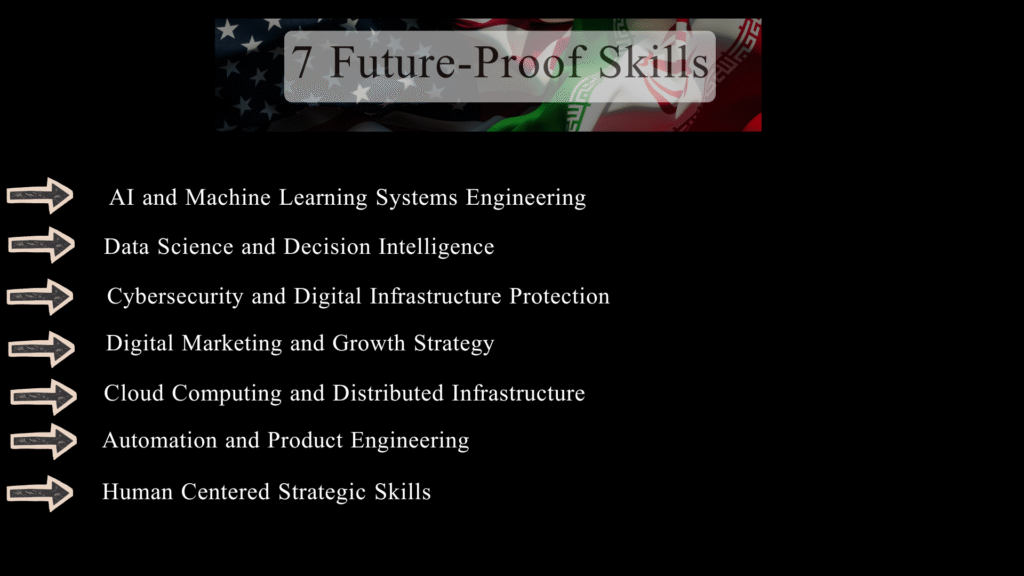
Below are seven future digital skills that are expected to remain valuable even as automation expands.
1. AI and Machine Learning Systems Engineering
Artificial intelligence is transforming how organizations operate. From predictive analytics to automated decision systems, companies increasingly rely on AI to improve efficiency and reduce operational costs.
Demand for AI specialists has grown rapidly in recent years. The World Economic Forum Future of Jobs Report 2023 identifies AI and Machine Learning Specialists as the fastest-growing job role globally.
AI engineers design algorithms, train machine learning models, and integrate intelligent systems into business workflows. As organizations adopt automation and AI-driven decision systems, professionals who can build and manage these technologies will remain in strong demand.
2.Data Science and Decision Intelligence
Modern organizations generate enormous volumes of digital data from financial systems, online platforms, and connected devices. Turning this data into strategic insight requires skilled data scientists and analytics professionals.
Data science involves statistical modeling, predictive analytics, machine learning integration, and business intelligence systems that help organizations make informed decisions.
The World Economic Forum Future of Jobs Report lists Data Analysts, Data Scientists, and Big Data Specialists among the fastest-growing professions globally
In uncertain economic conditions, companies rely even more heavily on analytics to optimize operations and identify new opportunities. As a result, data science and analytics skills continue to increase in importance across industries.
3. Cybersecurity and Digital Infrastructure Protection
Geopolitical conflict increasingly extends into the digital domain. Cyberattacks targeting financial systems, infrastructure, and communication networks have become more frequent.
Because of these risks cybersecurity professionals are in extremely high demand. Employment data indicates that information security analyst roles are projected to grow rapidly through the end of the decade.
Cybersecurity specialists monitor threats protect networks and design systems that defend organizations against digital attacks.
In a world where infrastructure can be targeted remotely, digital security becomes a national and economic priority, making cybersecurity one of the most important future digital skills.
4. Digital Marketing and Growth Strategy
No matter how advanced technology becomes businesses must still attract customers.
Digital marketing specialists help organizations grow through search engine optimization online advertising content strategy and data driven marketing campaigns.
Marketing today is not simply advertising. It involves building trust visibility and credibility across digital platforms.
This connects directly with the concept of personal branding discussed in the earlier article. Professionals who build authority online can attract opportunities, clients and collaborations from around the world.
5. Cloud Computing and Distributed Infrastructure
Cloud computing forms the backbone of modern digital services. Businesses increasingly rely on cloud platforms to store data run applications and manage global operations.
Cloud engineers design and maintain these systems ensuring digital services remain accessible from anywhere.
As remote work expands cloud infrastructure becomes even more critical because distributed teams depend on reliable digital environments for collaboration. Cloud infrastructure management is therefore one of the key future digital skills required in the evolving remote economy.
6.Automation and Product Engineering
Automation is reshaping how companies operate. Businesses increasingly automate repetitive tasks to reduce operational costs and improve efficiency.
Automation engineers develop systems that integrate AI tools automate workflows and optimize digital operations.
As economic pressure increases companies adopt automation faster. Professionals who understand automation architecture will therefore remain highly valuable and automation design will remain among the most valuable future digital skills.
7.Human Centered Strategic Skills
While technology advances rapidly certain human abilities remain extremely difficult to automate.
These abilities include creative thinking strategic decision making leadership ethical judgment and complex problem solving.
Research on AI and labor markets indicates that AI often complements human expertise rather than fully replacing it.
The most valuable professionals in the future economy will not simply use technology. They will guide how technology is applied. Strategic thinking therefore remains one of the most important future digital skills in the AI driven economy.
The Role of Personal Branding in the AI Economy
Technical expertise alone is no longer enough. As automation increases visibility and trust become key differentiators.
Professionals who build credible online identities through writing research and thought leadership demonstrate expertise to a global audience.
This is why personal branding plays an important role in the digital economy. Individuals who combine technical skill with strong future digital skills and a trusted online presence attract opportunities across borders and industries.
In many cases the difference between two equally skilled professionals is not ability but visibility and credibility.
Future Outlook for the Remote Economy
Looking ahead employment patterns will continue evolving as digital infrastructure expands.
The World Economic Forum estimates that 78 million new jobs may emerge globally by 2030 as digital transformation accelerates.
Many of these opportunities will appear in technology driven sectors remote services and digital entrepreneurship.
The future workforce will likely consist of professionals who combine advanced technical capabilities, adaptability to AI, strong communication abilities, and future digital skills.
Together these capabilities create economic resilience in a rapidly changing world.
Frequently Asked Questions
1. Which digital skill is most future-proof in 2026?
Skills related to artificial intelligence, data analysis, cybersecurity, cloud computing, and automation are considered the most resilient future digital skills because organizations depend on them to operate digital systems.
2. Can AI replace software engineers and developers?
AI tools can assist developers by generating code or automating certain tasks. However, complex system design, architecture, and strategic problem-solving still require human expertise. Most experts believe AI will augment software development rather than fully replace engineers.
3. What skills are safest during economic crises?
Technology-driven capabilities such as cybersecurity, data science, cloud infrastructure, and automation engineering tend to remain stable during economic disruptions because organizations depend on them to maintain operations.
4. Why does global conflict increase remote work?
When geopolitical instability affects supply chains, fuel prices, and infrastructure, companies often shift toward remote operations to reduce operational risks and maintain business continuity.
5. How does personal branding help in the digital economy?
Personal branding helps professionals demonstrate expertise, build trust, and attract global opportunities. In competitive digital markets, visibility, credibility, and strong future digital skills can significantly influence career growth.

Pingback: Financial Security in 2026: Global Conflict and Economy
Pingback: Work From Home 2026: 7 Ways the Global Economy Is Making