
Dropshipping in 2026: SWOT Analysis, Head-to-Head Competition, and E-E-A-T Strategy Playbook
1. Market Reality Check for Dropshipping in 2026 -The Numbers Don’t Lie but They Don’t Tell the Whole Story
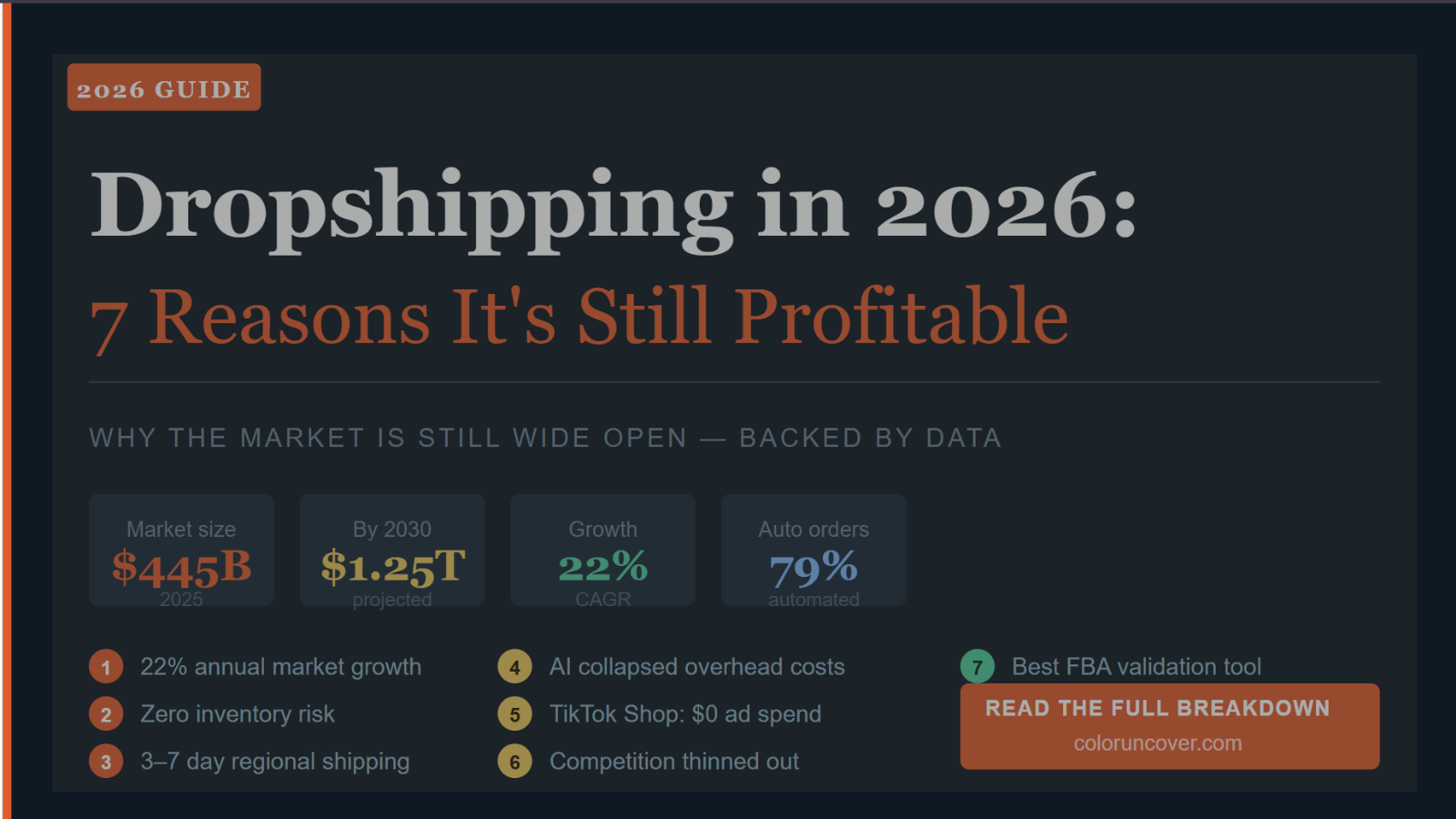
Dropshipping in 2026 no longer works with outdated strategies like slow shipping and generic products. But the version that made easy money is. Global market size is projected to reach $445.5 billion in 2025 and surge toward $1.25 trillion by 2030, yet the success rate sits at a sobering 10–20%. That gap tells you everything: the opportunity is massive, but the execution bar has never been higher.
| THE OLD MODEL IS BROKEN Listing AliExpress products → running Facebook ads → 15–30 day shipping = refunds, chargebacks, and poor reviews in 2026. 64% of store owners cite shipping delays as their #1 pain point (SellersCommerce). Customers now expect Amazon-level speed from every store they buy from. |
2. Why Strategic Analysis Matters for Dropshipping in 2026
2.1. SWOT Analysis: The opportunity in dropshipping hasn’t shrunk, but the tolerance for poor execution has.
| STRENGTHS • Zero inventory risk — pay only after a saleLow startup cost ($300–$800 realistic minimum) • Location independent — run from anywhere • Infinite product catalogue — test freely • Scalable without a warehouse or staff • Easy to pivot niches quickly • 3PL tools (ShipBob, AutoDS) now automate most operations | WEAKNESSES Net profit margins 15–20%; beginners often under 10% (SellersCommerce) • No product quality control — disputes hurt your store • Supplier unreliability and stockouts • Customer service burden falls entirely on you • Generic stores get zero organic traffic • Permanent dependence on ad spend to survive • Payment gateway access limited in some regions |
| OPPORTUNITIES TikTok projected to convert 45.5% of US users into buyers in 2025 (SellersCommerce) • AI tools lower product research and copywriting costs • Regional sourcing (EU/US suppliers) enables fast shipping • Eco and wellness niches have underserved demand • Private label upgrade path: test → validate → brand • Content-first stores earning organic SEO trafficHybrid model: dropship first, FBA for winners | THREATS • Supply chain disruptions from geopolitical tensions • Rising fuel and logistics costs compressing margins • Rising TikTok/Meta ad costs year-on-year • Google Helpful Content Update penalises thin product pages (OrbitInfotech) •Temu and Shein competing directly as dropshippers • PayPal/Stripe account bans on low-trust stores •Consumer skepticism toward anonymous online stores |
3. Dropshipping in 2026 vs Amazon FBA vs Print on Demand vs Affiliate Marketing
The question is no longer just ‘should I dropship?’ it’s ‘which model fits my situation? 27% of all ecommerce businesses now use dropshipping as their primary fulfillment model (GVR). Here is the honest breakdown.
| Factor | Dropshipping | Amazon | Print-on-Demand | Affiliate |
| Startup Cost | $300–$2,000 | $2500–$5000+ | $0–$50/monthly | $0–$100 |
| Profit Margin | 5–30% (branded: higher) | 25–50% | 30–65% | 5–50% commission |
| Inventory Risk | None | High | None | None |
| Brand Control | Medium | Medium | High | None |
| Scalability | High | Very High | Medium | Medium |
| Time to First Sale | Days to weeks | 2–4 months | Days (Etsy/Merch) | Weeks to months |
| Ad Spend Required | $500–$1,500/monthly | Amazon PPC optional | Low / Organic | Low / Organic |
| Quality Control | Low | High | Medium | N/A |
| Best For | Beginners testing ideas | Scaling proven products | Creatives, designers | Content creators |
| 2026 Trend | Evolving | Strong | Rising | Stable |
4. What to Sell in Dropshipping in 2026: Niches with Real Demand
Chasing viral trends is a 2020 strategy. In 2026, winning niches share three traits: utility-driven demand, repeat purchase potential, and alignment with shifting consumer values (sustainability, health, convenience).
| Niche | Why It Works in 2026 |
| Eco & Sustainable Products | Reusable household items, bamboo goods, zero-waste kitchen. High social shareability and strong organic content angles. |
| Home Organization | Storage solutions, closet systems, desk accessories. Pinterest-driven — organic traffic converts well here. |
| Health & Wellness | Recovery tools, posture aids, supplement accessories. High AOV and strong communities to market into. |
| Pet Care & Accessories | Emotional buyers, repeat purchases, growing market. Pet owners spend more than any other consumer segment. |
| DIY & Crafting Tools | Strong YouTube and TikTok content ecosystem. Buyers are community-driven and trust peer recommendations. |
| Baby & Parenting | Parents research obsessively. High intent, strong repeat buyers. Content + SEO works exceptionally well. |
5. Payment Gateways for Dropshipping in 2026: Asia, Pakistan and Europe
This is the part most beginner guides skip and the part that kills stores before they launch. Payment processing access is not equal worldwide. Here is the honest picture.
| Asia • Payoneer — most reliable, widely accepted • Wise (formerly TransferWise) • 2Checkout / Verifone • Stripe via UK/US entity (requires business setup) • Airwallex — growing in South Asia | Europe • Stripe — full access, preferred • PayPal Business •Klarna (Buy Now Pay Later) • Adyen — enterprise scale • Mollie — popular for EU SMEs |
6 Google’s 2026 Helpful Content Update: What It Means for Dropshipping
Google’s 2024–2025 core updates reduced low-quality content visibility by over 45% (SaffronEdge). Thin product pages, AI-generated descriptions with no original value, and generic ‘best product’ blog posts are all losing rankings.
6.1.E-E-A-T: The New Ranking Foundation
Google evaluates every page on four dimensions. For dropshipping stores and related blogs, this means demonstrating real-world expertise.
| E Experience Show real product photos, actual purchase screenshots, honest reviews not manufacturer stock images. | E Expertise Write about your niche as if you actually use the products. Add comparisons, case studies, and data. | A Authoritativeness Build backlinks from niche sites. Get mentioned by others. Have a real About page with author credentials. | T Trustworthiness, HTTPS, clear refund policy, contact info, customer reviews, and transparent business details. |
6.2.What Google Rewards in 2026
- Long-form content answering every related question (pillar pages)
- Original data, user-generated reviews, case studies
- YouTube videos embedded into blog posts (improves dwell time + ranking)
- Structured data (schema markup) on product and FAQ pages
- Mobile-first design with fast Core Web Vitals (INP replaced FID)
- Topical authority,consistent publishing within one niche
6.3.Velocity-Based SEO: The 2026 Edge:
The most effective teams in 2026 balance long-term SEO authority with ‘velocity’ — identifying breakout trend keywords (5,000%+ growth spikes) and publishing content while demand is still spiking (Yotpo). This ‘freshness + authority’ combination is how smaller sites outrank established brands.
7. 7 Reasons Dropshipping in 2026 Is Still Profitable
Reason 1: The Market Is Growing at 22%
Every Year The global dropshipping market is valued at $445.5 billion in 2025 and is projected to hit $1.25 trillion by 2030. A market growing this fast does not disappear, it evolves. The sellers’ failure is not failing because dropshipping stopped working. They are failing because they kept using 2020 tactics in a 2026 market.
Reason 2: Zero Inventory Risk Still Makes It the Lowest-Risk Star
You only pay for a product after a customer has already paid you. No warehouse. No bulk orders. No storage fees. No dead stock. This fundamental advantage has not changed, and it remains unmatched by any other physical product business model. For anyone starting with limited capital — especially from markets like Pakistan, India, or Southeast Asia — this is still the single most accessible path into ecommerce.
Reason 3 : Regional Suppliers Have Solved the Slow Shipping Problem
The old death sentence for dropshipping, 15 to 30 day shipping, is gone for sellers who adapted. US and EU warehouse networks through CJ Dropshipping, Zendrop, and Spocket now deliver in 3 to 7 days. The shipping problem was real, but it was a supplier problem, not a model problem. Sellers who switched to regional fulfillment saw refund rates drop and repeat purchases rise.
Reason 4 : AI Has Collapsed the Operational Cost
In 2025, 79% of successful dropshippers use automated order processing, reducing manual errors by 94% (Thunderbit). What used to require a virtual assistant team, product research, description writing, pricing, order routing, and customer emails can now run on a fraction of that cost with tools like AutoDS, Zendrop, and AI-powered Shopify apps. Margins that looked thin three years ago look different when your overhead is a $50/month tool subscription.
Reason 5 : TikTok Shop Removed the Ad Budget Barrier
Paid ads on Meta used to be the only real customer acquisition channel, costing $500 to $1,500 per month before seeing any traction. TikTok Shop changed that entirely. Dropshippers are now generating sales through organic short-form content with zero ad spend. TikTok is projected to convert 45.5% of its US users into buyers in 2025, more than Facebook or Instagram. Sellers who build content-first rather than ads-first are seeing lower cost per acquisition than at any point in the last five years.
Reason 6 : The Competition Thinned Out, Not Thickened
Everyone says dropshipping is saturated. The data says something different. Google search interest in the term “dropshipping” peaked at 100 index points in 2023 and dropped to 52 by early 2025. Fewer people are trying it casually. The lazy sellers who flooded the space with generic stores and AliExpress listings have largely left. What remains is a cleaner competitive landscape for sellers willing to build an actual brand and brand-led stores now face less noise, not more.
Reason 7: It Is the Best Validation Tool Before Scaling to FBA
The smartest ecommerce operators in 2026 do not choose between dropshipping and Amazon FBA; they use dropshipping first. Test 20 products. Find the 2 that convert. Move those to FBA with private labeling and the Prime badge. Dropshipping has become the research and development phase of a proper e-commerce brand. That makes it more valuable, not less. The profit is not always in the dropshipping store. Sometimes it is in what the dropshipping store teaches you.
Conclusion:
| The Real Formula for 2026 Distribution speed + payment infrastructure + brand trust + organic content = a dropshipping business that survives long enough to become something worth owning. |
*Sources: Startup costs — Whop, StarterX/JungleScout, MerchTitans, ClickBank.
Profit margins — SellersCommerce/TrueProfit, M19, Customily, Post Affiliate Pro.
Ad spend — EntreResource. Time to first sale — USA Sweet Solutions, MerchTitans,
Post Affiliate Pro. All data is current as of 2025–2026.

Pingback: DropShipping vs Affiliate Marketing: [Which is Right for You?]