
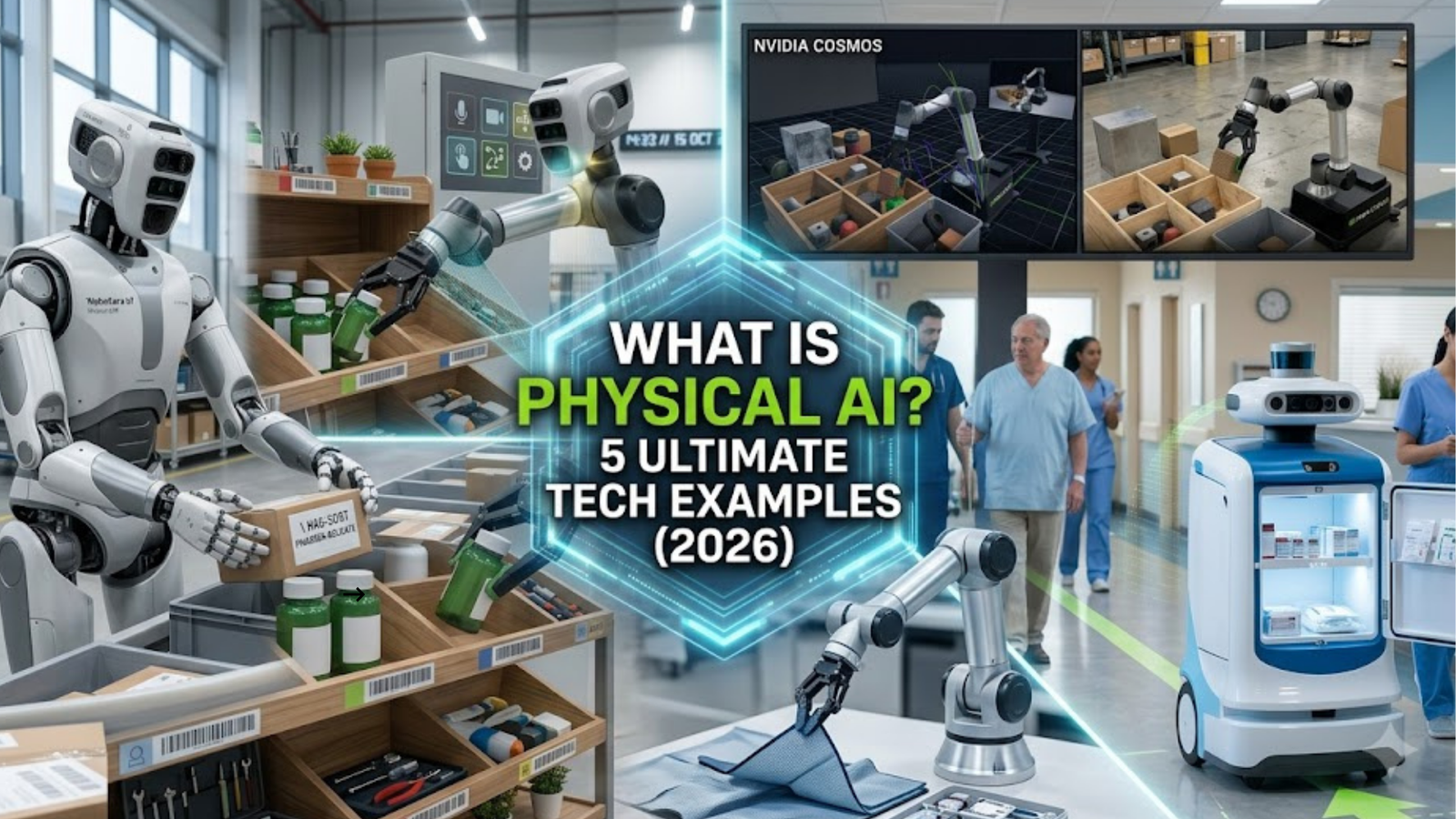
So, what is Physical AI? In short, it is AI that leaves the screen and steps into the real world. It sees. It reasons. Then it acts, using robots, sensors, and machines. That is the whole idea in one line.
This shift is not a small update. In fact, NVIDIA’s Jensen Huang called it the “ChatGPT moment for physical AI” at CES 2026. As a result, warehouses, hospitals, farms, and factories are all racing to adopt it. So, let’s break down what Physical AI actually means, and then look at five real tech examples shaping 2026.
What is Physical AI, Exactly?
Physical AI is artificial intelligence that perceives, reasons, and acts inside the physical world, instead of only producing text or images. A chatbot answers a question. A Physical AI system, however, moves, grasps, or drives.
Three parts work together to make this happen:
| Perception | Cameras, LiDAR, and depth sensors read the environment. |
| Reasoning | Foundation models and vision-language models decide what to do next. |
| Action | Motors, actuators, and robotic arms carry out the decision. |
Older industrial robots could only follow fixed instructions. Change the lighting or move the part slightly, and they would fail. Physical AI is different. It adapts. It learns from patterns instead of rigid code, which is exactly why 2026 feels like a turning point rather than a small step forward.
Why Physical AI Matters in 2026
Here’s the thing: generative AI taught machines to talk. Physical AI is teaching machines to do. That difference changes entire industries, not just chat windows.
For example, warehouse automation alone is projected to reach between €9.5 billion and €14.2 billion in 2026, growing at 15 to 20 percent each year. Meanwhile, hospitals, farms, and construction sites are testing robots that once existed only in demos. Clearly, this is no longer a lab experiment. It is becoming everyday infrastructure.
What is Physical AI in Action? 5 Ultimate Tech Examples in 2026
Below are five real examples of Physical AI in action today. Each one shows a different piece of the puzzle.
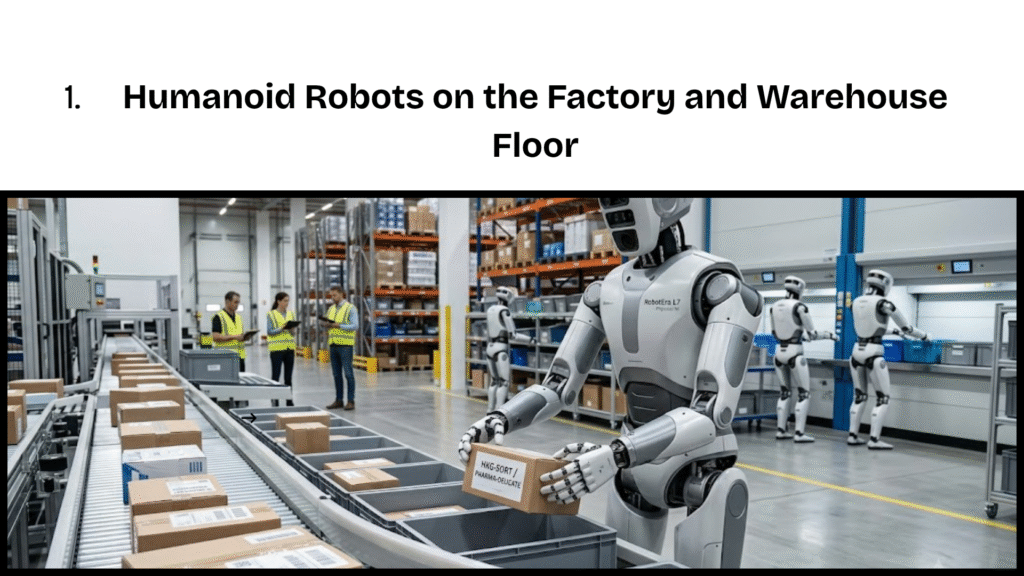
Humanoid robots are no longer just walking demos. They now sort packages, fold laundry, and handle delicate items with real precision. RobotEra’s bipedal L7 humanoid, for instance, pairs with a dexterous hand system to manage tasks like pharmaceutical sorting and cross-border logistics. Consequently, warehouses can run longer shifts with fewer errors.
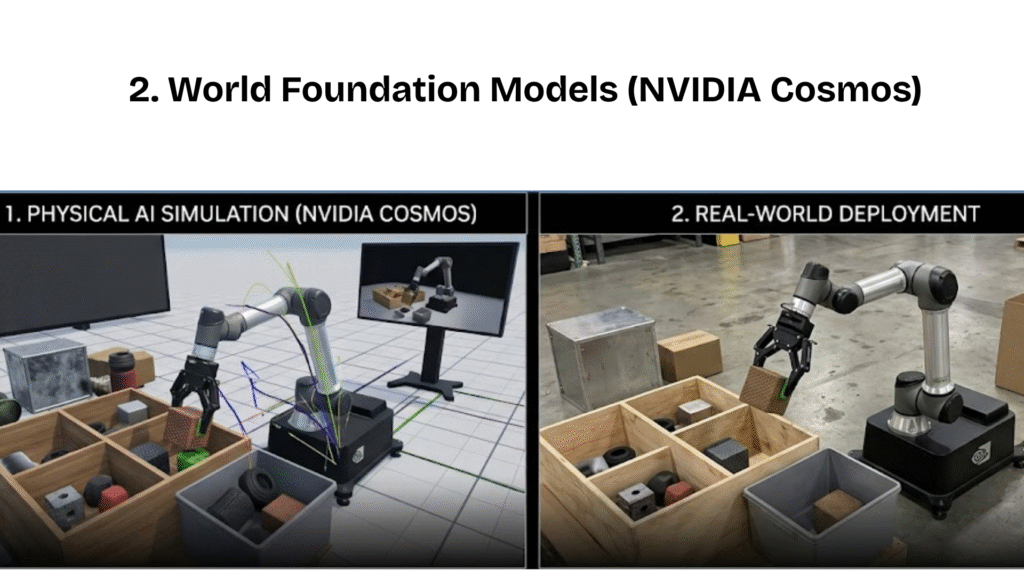
A robot cannot practice safely by trial and error in the real world. That is risky and slow. Instead, world foundation models simulate physics first. NVIDIA’s Cosmos 3 is a leading example. It generates synthetic training worlds so robots can learn depth, texture, and motion before ever touching real hardware. As a result, training becomes faster, cheaper, and far safer.
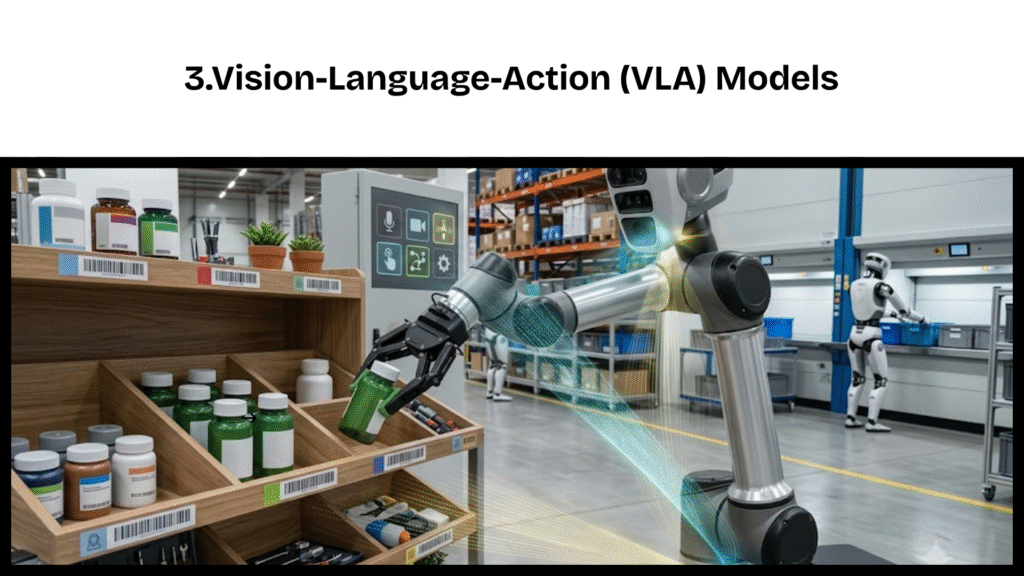
This is the model layer everyone is talking about in 2026. VLA models, like NVIDIA’s Isaac GR00T, take the same vision-language backbone behind today’s chatbots and add a third skill: producing physical action. So, a robot can hear “organize the shelf” and translate it into a real sequence of movements. In other words, it understands context, not just commands.
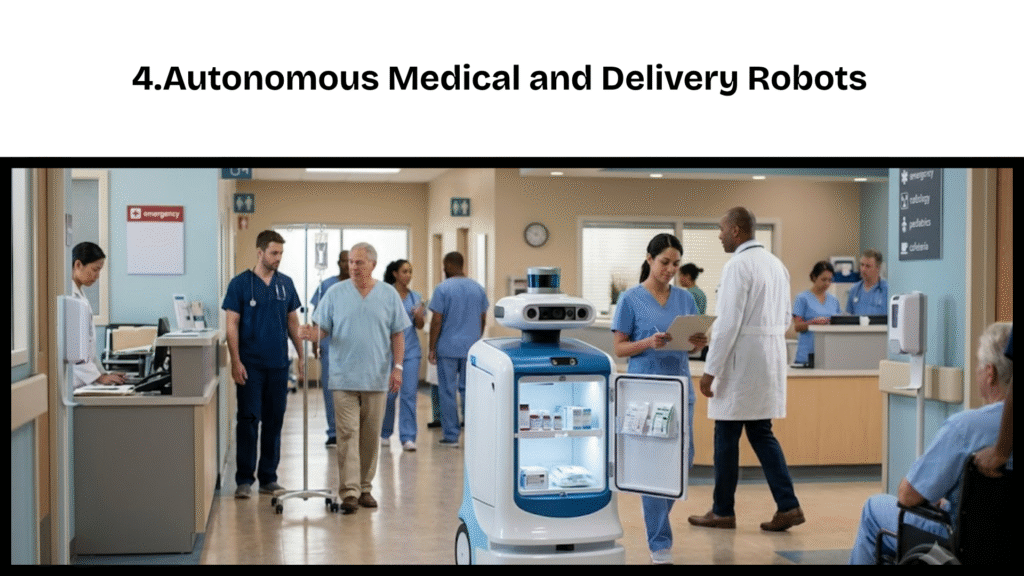
Physical AI is not only about humanoids. Autonomous delivery robots, surgical assist devices, and medication-delivery units are already active in hospitals and cities. These systems combine perception and motor control to move safely around people, which matters enormously in crowded, high-stakes settings.
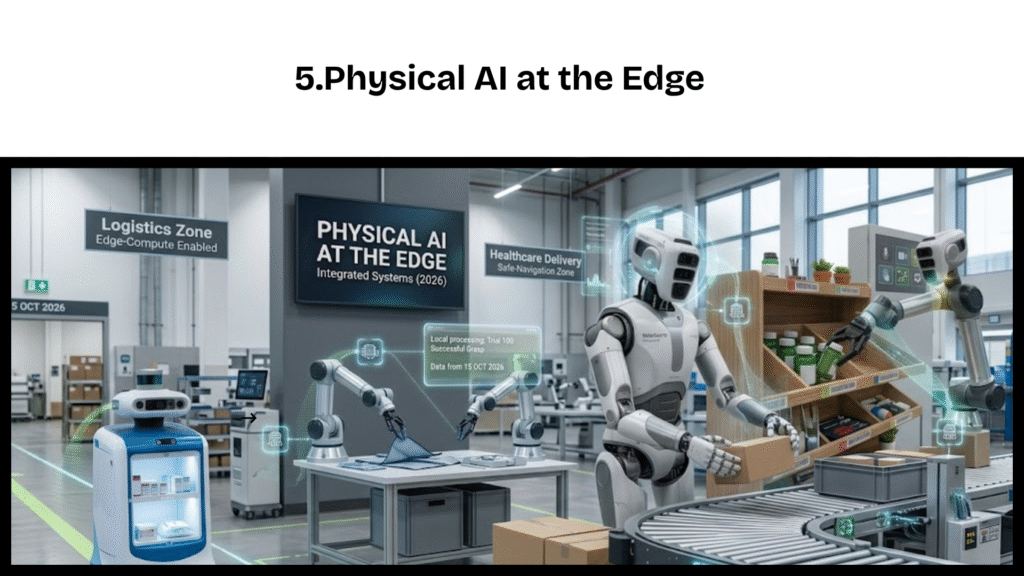
Finally, not every robot can rely on a distant data center. Therefore, physical reasoning is moving to the edge, closer to the sensor itself. Companies like Analog Devices describe this as intelligence that perceives motion, sound, and space locally, without waiting on a server. This means a factory robot can react to an unexpected task in real time, using only a few examples, instead of pausing for cloud processing.
Physical AI vs. Generative AI: The Key Difference
Generative AI creates text, images, or code. Physical AI creates action. That single distinction explains why the two fields, though related, solve completely different problems. One lives in software. The other lives in the room with you.
This distinction also matters for anyone thinking about how AI reshapes daily habits and decision-making. If you want a broader view of how growing AI reliance affects human judgment, our guide on AI dependence and critical thinking explores that question in more depth.
What is physical AI- (FAQ)
1. What is Physical AI in simple terms?
Physical AI is AI that senses its surroundings, reasons about them, and then physically acts, usually through a robot, vehicle, or smart device.
2. Is Physical AI the same as robotics?
Not exactly. Robotics is the hardware. Physical AI is the intelligence layer, made of perception and reasoning models, that decides what the hardware should do.
3. What industries use Physical AI in 2026?
4. Why is 2026 considered the breakout year for Physical AI?
Because the model layer finally caught up with the hardware. World foundation models and VLA models now let robots generalize, instead of needing hand-coded instructions for every task.
What is physical AI -Final Thoughts
So, what is Physical AI, really? It is the moment AI stops staying inside the screen and starts moving through your warehouse, hospital, or living room. Humanoid robots, world foundation models, VLA systems, medical robots, and edge intelligence are five clear signs that this shift is already underway in 2026. As adoption grows, understanding these fundamentals early will matter, both for businesses and for anyone trying to keep up with where AI is truly headed next.
