
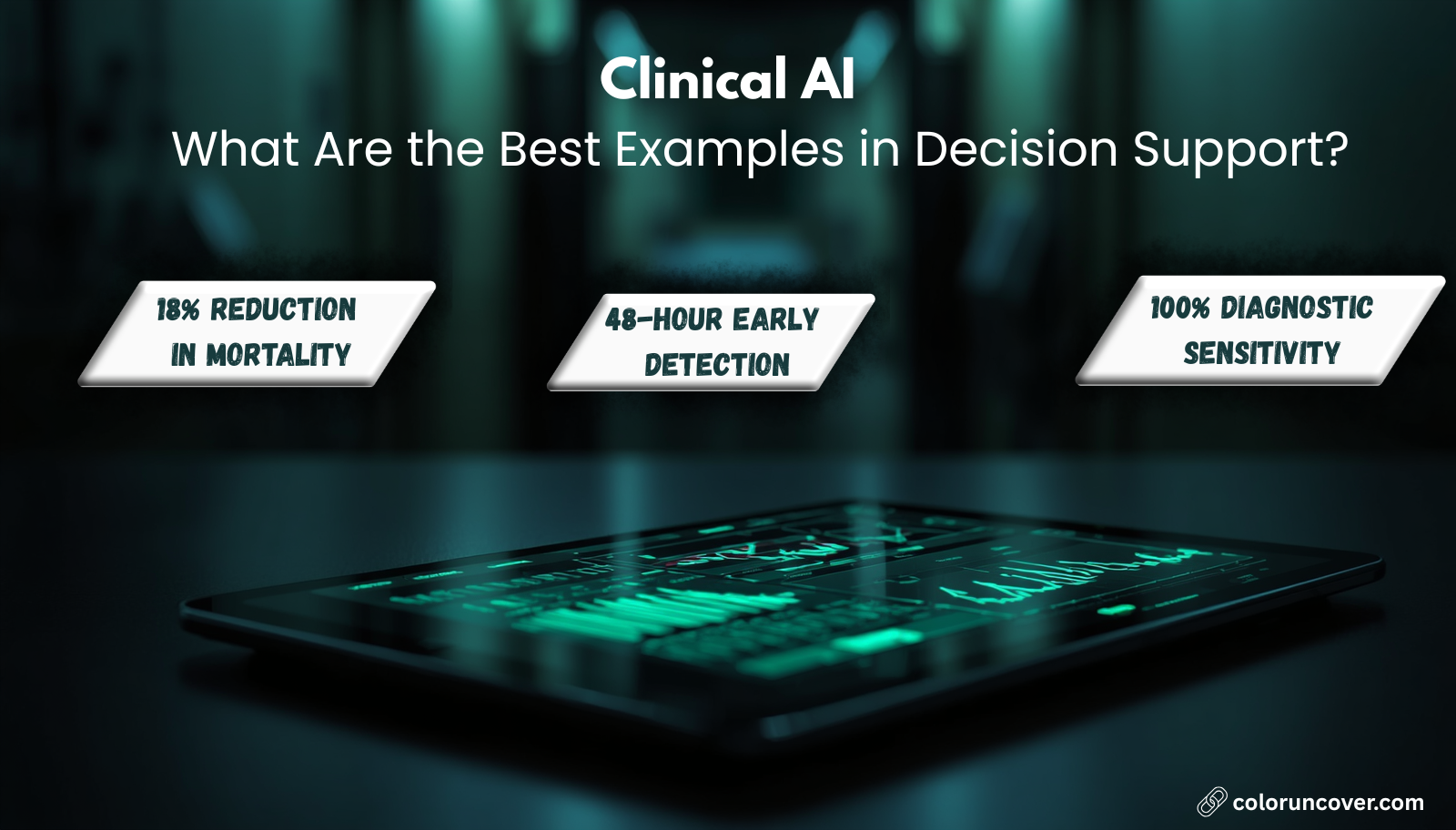
First, Clinical AI is no longer just a future dream. Today, it is actively changing how doctors make choices in hospitals and clinics. For example, these smart tools can spot severe infections up to 48 hours early. Also, they can find dangerous problems in X-rays in mere seconds. Furthermore, they can even check for eye diseases without a specialist in the room. As a result, patient health is improving greatly when these tools are used correctly.
However, not all Clinical AI works perfectly. In the past, older warning systems failed because doctors ignored about 66% of their alerts. Therefore, modern Clinical AI is fundamentally different. Instead of using simple rules, it looks at a patient’s entire medical record. Consequently, it checks notes, lab results, and medicines before giving any advice.
Additionally, you can read our related guide: Robotics in Healthcare: Advanced Nations & Human Value. In this post, therefore, we will look at the top Clinical AI examples of 2026. Specifically, we focus on tools with FDA approval, published data, and real hospital success. Furthermore, the FDA updated its rules in January 2026. This update makes it much easier to know which Clinical AI tools are safe to use today.
1. Clinical AI for Catching Sepsis Early
TREWS by Bayesian Health
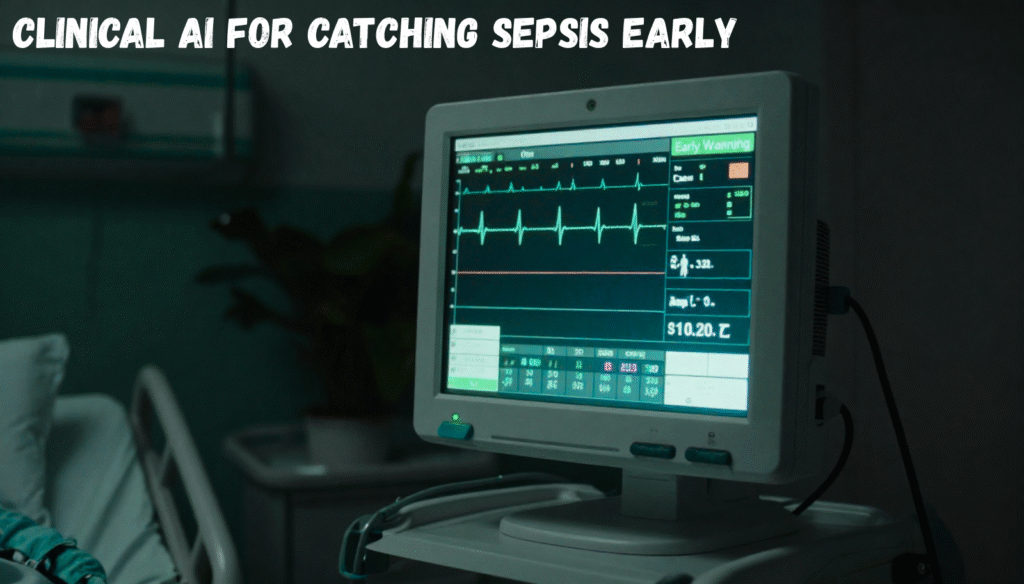
First, sepsis is a deadly infection. Therefore, catching it early is absolutely vital. Bayesian Health created a Clinical AI tool called TREWS. Specifically, it monitors patient records to detect sepsis up to 48 hours in advance. In fact, old systems cannot match this speed. Furthermore, in May 2026, the FDA gave its first-ever approval to an AI-based sepsis warning device for this exact system
| 18% Reduction in in-hospital mortality | 48 hrs Earlier detection window | 764K+ Patient encounters validated |
- Better Survival: It lowers hospital deaths by about 18
- Faster Alerts: It finds the problem 48 hours sooner.
- Proven Results: It has been tested on over 764,000 patient visits.
Most importantly, this Clinical AI works before a doctor even suspects a problem. As a result, the lower death rate comes from giving antibiotics much faster. Consequently, this extra “lead time” saves many lives.
2. Clinical AI for Reading X-Rays Quickly
Aidoc for Fast Scans
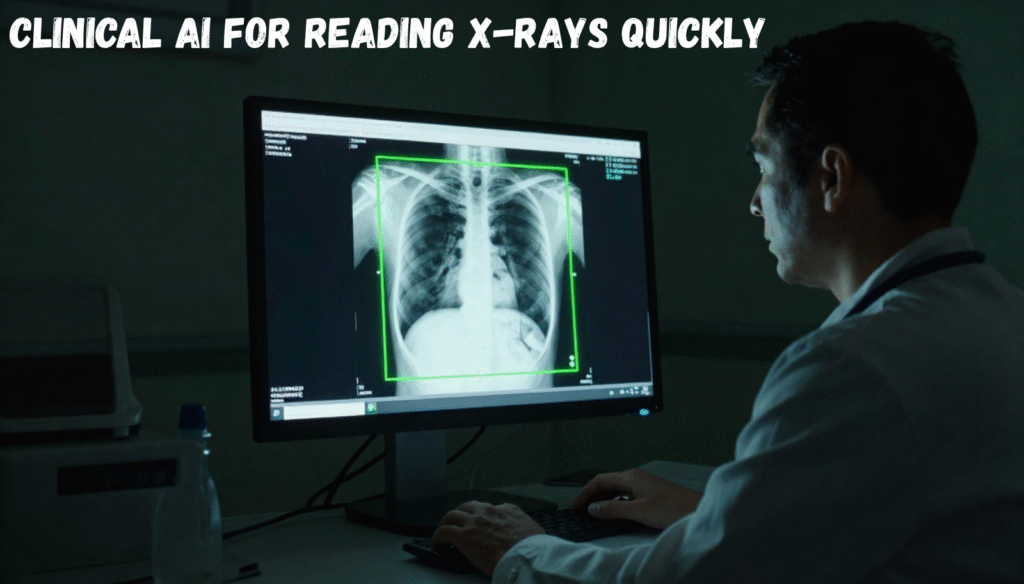
First, Aidoc uses Clinical AI to look at CT and MRI scans right away. It quickly finds severe issues like brain bleeding or blood clots in the lungs. Then, it moves these urgent cases straight to the top of the doctor’s list. Additionally, doctors do not need to log into a new system to use it
| 1,600+ Medical centres deployed | 60M+ Patients supported annually | 150+ US health systems as of early 2026 |
- Wide Use: Over 1,600 medical centers use it today.
- Many Patients: It helps over 60 million patients every year.
- Top Hospitals: More than 150 US health systems use it as of early 2026.
Furthermore, by January 2026, the FDA had approved over 1,250 AI medical devices. Most of these approvals are for reading scans. Therefore, this Clinical AI helps doctors treat strokes and blood clots much faster.
3. Clinical AI for Eye Disease Screening
Smart Retinal Cameras
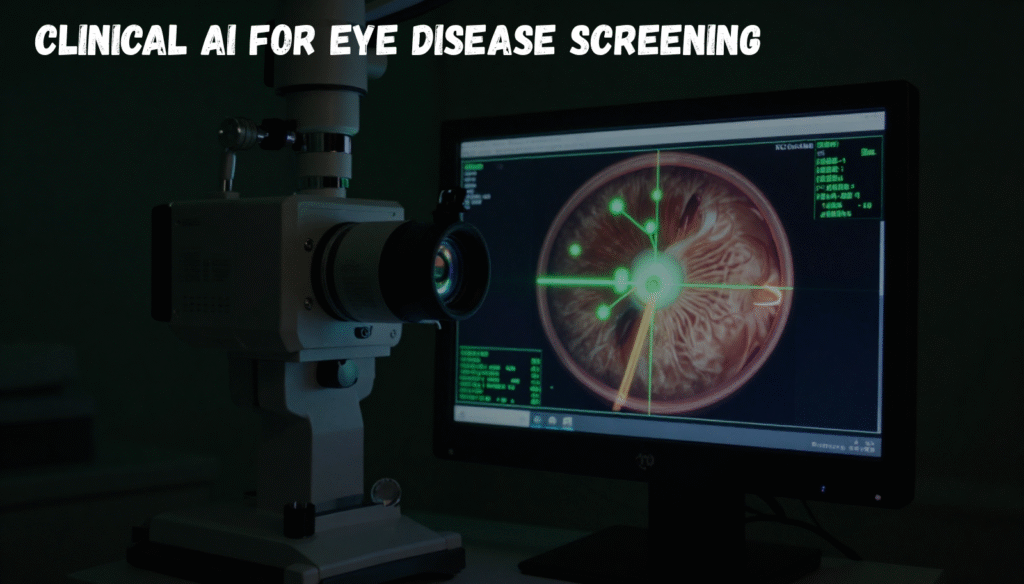
For example, there are now FDA-approved Clinical AI cameras that check for eye disease. Specifically, they look for diabetic retinopathy in regular clinics. Furthermore, they do this in minutes without an eye specialist present. The Clinical AI looks at pictures of the eye and immediately decides if the patient needs further help
| 100% Sensitivity for mild DR (Lausanne real-world study) | 3 FDA Cleared autonomous AI DR systems | 1 in 3 Diabetics at risk of retinopathy |
- Perfect Accuracy: It found 100% of mild cases in a recent real-world study.
- Trusted Tools: There are 3 FDA-approved Clinical AI systems for this task
- High Need: 1 in 3 diabetic patients are at risk of this eye problem.
Most importantly, this Clinical AI helps stop preventable blindness. Many adult patients skip their yearly eye exams. However, regular doctors can now use these smart cameras during normal diabetes visits. As a result, screening rates climb dramatically.
4. Clinical AI for Medical Questions
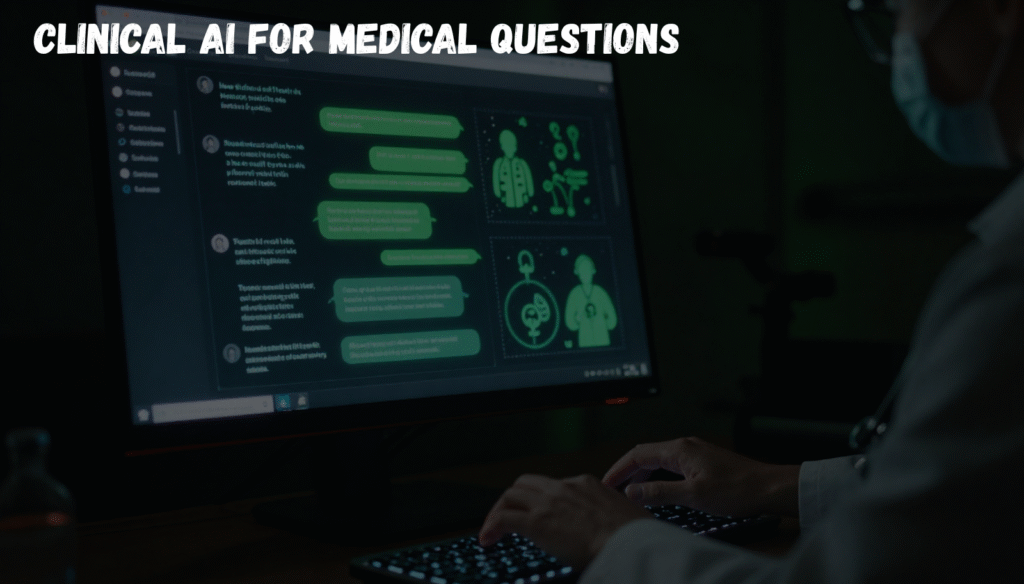
UpToDate Expert AI
First, doctors need quick and truthful answers. Therefore, UpToDate launched a conversational Clinical AI assistant in late 2025. Unlike general AI, this Clinical AI only uses trusted medical facts from the UpToDate library. Consequently, it gives doctors clear steps and direct links to real sources.
| 2025 Expert AI launch date | RAG Retrieval-augmented not hallucination-prone | Cited sources Every answer links to the guideline |
- New Tech: It successfully launched in late 2025.
- Safe Answers: It uses special technology to avoid making up false facts.
- Clear Proof: Every single answer links directly to a medical guideline.
However, older alert systems often annoyed doctors. In contrast, this Clinical AI builds trust by showing its exact proof. Because doctors can verify the facts easily, they use the tool much more often.
5. Clinical AI for Safe Medicine Rules
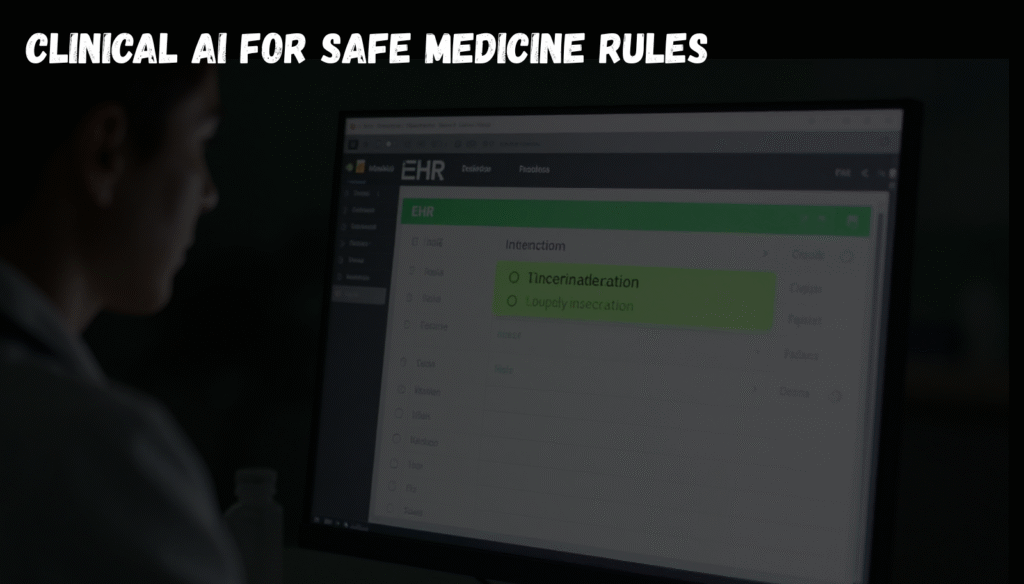
Epic Health Records
Often, old systems give too many useless alerts. For example, a doctor might get 14 ignored warnings before 10 am. Therefore, new Clinical AI inside Epic’s system is much smarter. It looks at the whole patient picture before sending a warning. As a result, doctors only see alerts that truly matter.
| 34% Typical CDS uptake in traditional systems | >150 Epic AI features in development for 2026 | $300B+ Digital health market size 2026 |
- Old Problems: Doctors only followed about 34% of old alerts.
- New Tools: Epic has over 150 Clinical AI features in development for 2026.
- Big Growth: The digital health market will pass $300 billion in 2026.
Additionally, hospitals spent nearly $1.4 billion on healthcare AI in 2025. However, spending money is simply not enough. The best Clinical AI knows exactly when to stay quiet. Consequently, this drastically reduces stress for tired doctors.
Frequently Asked Questions About Clinical AI
1. Which Clinical AI tools are best in 2026?
First, TREWS is excellent for catching sepsis. Second, Aidoc is best for reading X-rays. Additionally, LumineticsCore helps check eyes. Furthermore, UpToDate Expert AI answers complex medical questions. Finally, Epic uses Clinical AI to manage medicines safely.
2. What is the hardest part of using Clinical AI?
However, the biggest problem is alert fatigue. In fact, doctors ignore about 66% of old alerts. Also, doctors worry about AI bias and trusting the tools. Therefore, modern Clinical AI fixes this by showing clear proof and reasoning.
3. Is Clinical AI approved by the FDA in 2026?
Yes, absolutely. By January 2026, the FDA had approved over 1,250 AI medical devices. Most importantly, they approved the first Clinical AI tool for finding sepsis in May 2026. Furthermore, a January 2026 rule update made the approval process much clearer
4. What is Clinical AI in decision support?
First, Clinical AI refers to smart tools used by doctors. These tools live inside computer systems, X-ray machines, and reference apps. Therefore, they analyze patient data in real time to help doctors diagnose and prescribe safely.
References
FDA Regulations: FDA Revised Clinical Decision Support (CDS) Software Guidance – American College of Radiology (ACR), January 2026.
Sepsis Study: FDA Clears First AI Early Warning System for Sepsis – Center for Infectious Disease Research and Policy (CIDRAP), May 2026.
Company Platform: Bayesian Health — TREWS Platform Official Site
Imaging Tech: Aidoc Official Site — Real-Time AI Triage
Industry Insights: How AI is Transforming Clinical Practice in 2026 – Tandem Health, May 2026.
Market Analysis: AI CDS Evolution with FDA Clearances – IntuitionLabs, February 2026.
Clinician Surveys: 2026 AI-CDS Report: 89% of Clinicians Expect Better Outcomes – EBSCO, 2026.
Tool Comparisons: Best AI CDS Tools 2026 – iatroX Comparison Report, March 2026.
Vision Screening: Autonomous Diabetic Retinopathy AI Adoption and Real-World Performance Study – American
