
Survival skills 2026 are no longer something you read about and forget. They are what your family actually needs right now. If your grocery bill has doubled in the past year, your fuel costs have spiralled, and you feel like the ground is shifting beneath you, you are not imagining it.
The world in 2026 is living through three crises at the same time. An active war is disrupting the Strait of Hormuz. Oil prices have crossed $100 a barrel. And household inflation is squeezing budgets to breaking point across every continent.
According to the World Bank’s April 2026 Commodity Markets Outlook, energy prices are projected to surge 24% this year, the largest spike since Russia invaded Ukraine in 2022. In many developing nations, fuel prices have already jumped between 50 and 85% since February alone.
This is not a blog about panic. It is about preparation. The 12 survival skills below are organised from your kitchen to your finances, and every single one of them is something a real family can start this week.
For more family preparedness guides, visit coloruncover.com
Why 2026 Is Different in Survival Skill : The Numbers You Need to Know:
Before we get into skills, understand what we are actually dealing with. This is not ordinary inflation.
- Oil prices briefly hit $119/barrel in early March 2026: roughly double end-2025 levels (UBC Magazine, 2026)
- Diesel has surged over 85% in the UAE and over 70% in Malaysia since February 2026 (Statista, May 2026)
- Food prices in war-affected regions: bread +140%, cooking oil +219%, dairy +116% year-on-year (Wikipedia / Iran War Economic Impact)
- The IEA describes this as “the largest supply disruption in the history of the global oil market”
- Developing economy inflation is forecast to hit 5.1% in 2026: a full percentage point above pre-war expectations (World Bank, April 2026)
- Pakistan, Bangladesh, Vietnam and several African nations are already experiencing severe fuel shortages (UN News, March 2026)
For an average US household, if oil stays at $86/barrel, the added annual cost is estimated at $2,000 and that does not include food or heating. For families in South Asia or Africa, the proportional impact is far worse.
12 Survival Skills 2026 Every Family Needs
1. Survival Skills 2026: Build a 4-Week Emergency Food Supply
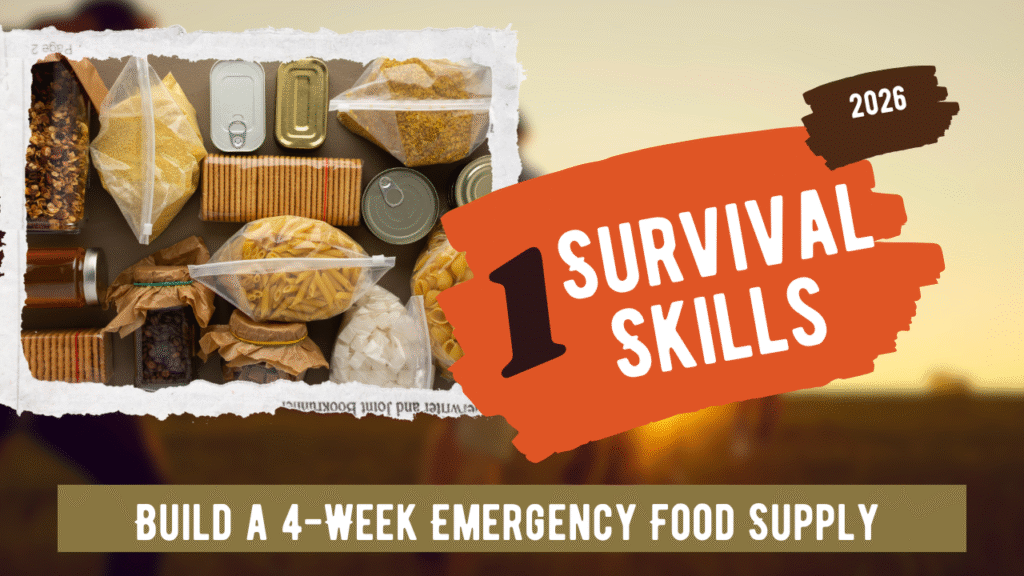
Supply chains are fragile. Fertiliser shortages caused by the Strait of Hormuz closure are already expected to reduce crop yields across South Asia. Do not wait for shortages to hit your local supermarket.
What to stock (per person, 4 weeks):
- Rice or wheat flour 10 kg
- Lentils, chickpeas, dried beans 5 kg
- Cooking oil 4 litres
- Canned fish, meat, or pulses 20+ tins
- Salt, sugar, powdered milk, multivitamins
- Water at minimum 14 litres stored (2 litres per day per person)
2. Survival Skills 2026: Master Home Energy Auditing
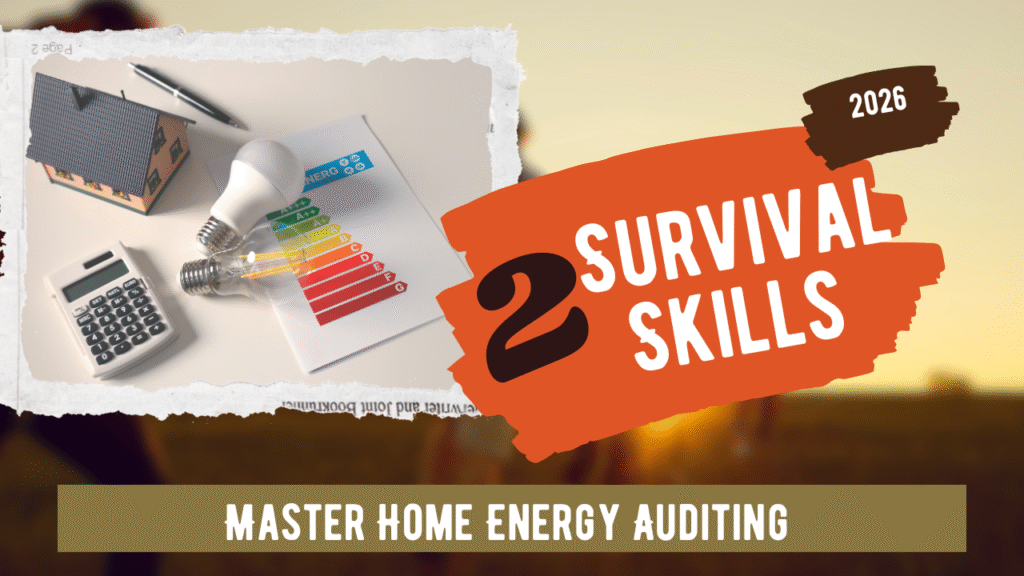
The IEA has identified household energy reduction as one of the most immediately effective responses to the current crisis. You do not need to wait for government policy.
- Seal doors and windows drafts account for up to 30% of heating loss
- Switch to LED lighting if you have not already
- Unplug idle electronics standby drain adds 5–10% to bills
- Reduce hot water temperature from 60°C to 50°C
- Use cold water washing cycles where possible
Families that audit their home energy use typically reduce bills by 15–25% without major investment.
3. Survival Skills 2026: Reduce Fuel Dependency in Transport
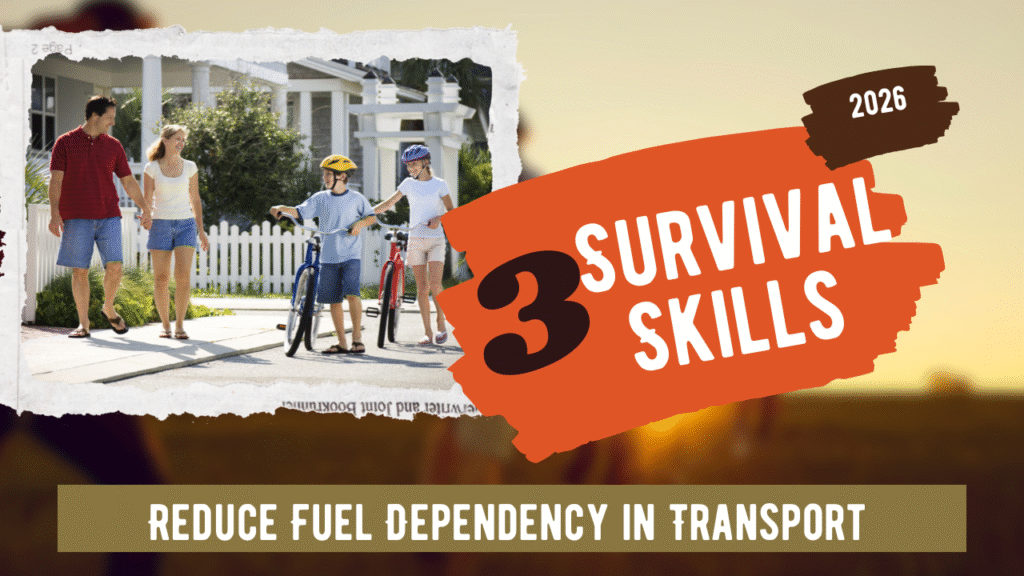
The IEA’s demand-side measures report recommends working from home, reducing highway speed by 10 km/h, and maximising public transport all of which save significant fuel.
- Work remotely at least 3 days per week if your job allows
- Combine errands into single trips plan routes before leaving home
- Carpool to work, school runs, and regular appointments
- Consider an e-bike for short urban commutes (payback period is now under 12 months in many markets)
- Keep tyres inflated to manufacturer spec underinflation increases fuel use by up to 3%4.
4.Survival Skills 2026 : Learn Basic Food Preservation
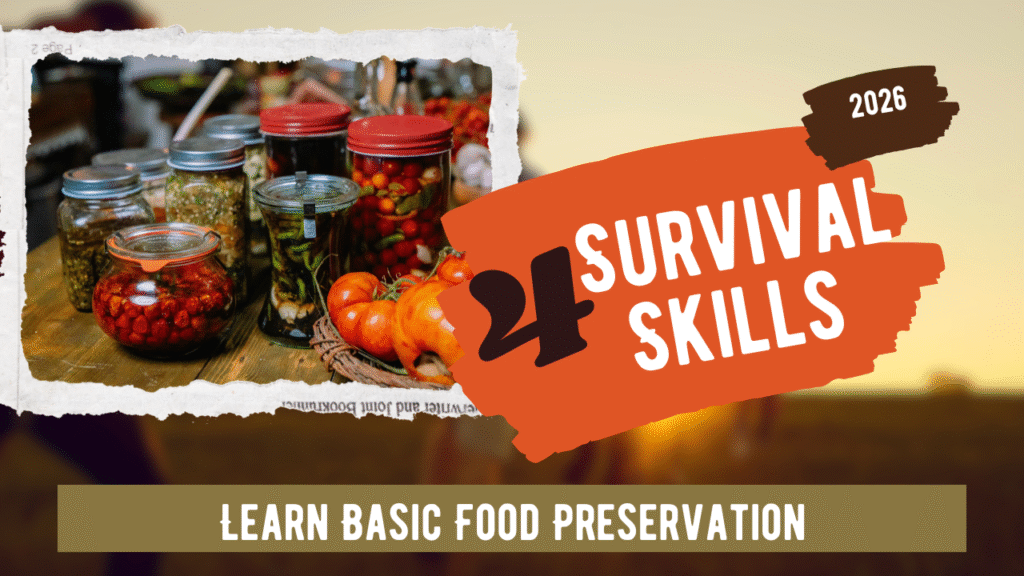
These survival skills 2026 families are using have one thing in common when grocery prices spike, preserving seasonal surplus becomes a genuine money-saving skill. These techniques require minimal equipment.
- Pickling: vinegar + salt + vegetables = months of shelf life
- Drying: herbs, chillies, and sliced fruits can be sun-dried or oven-dried
- Fermentation: yoghurt, kimchi, and sourdough require no refrigeration to make
Freezing: blanch vegetables before freezing to retain nutrients for 8–12 months
5. Survival Skills 2026 : Grow Your Own Food — Even in Small Spaces
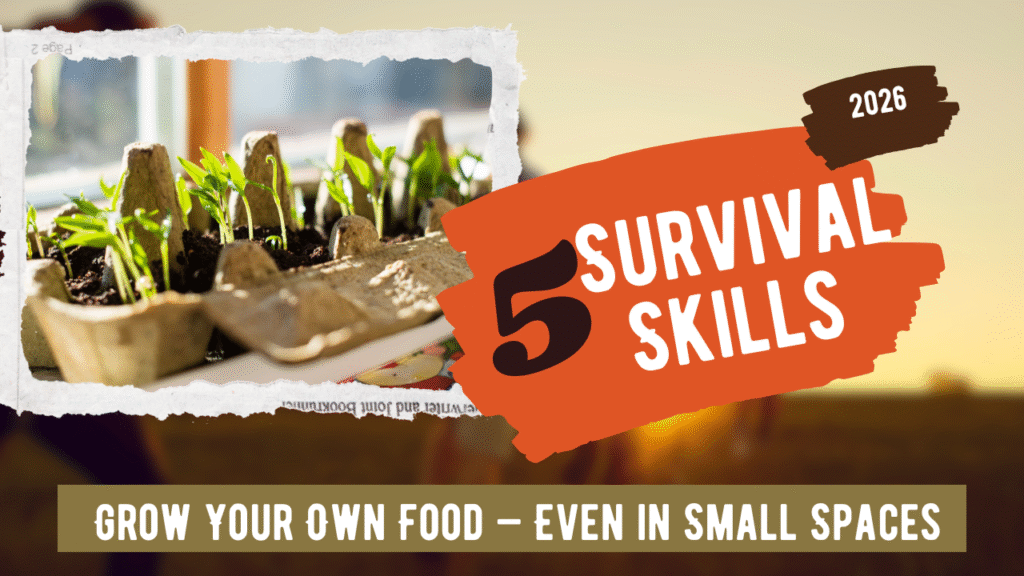
Urban growing is no longer a hobby it is a hedge against food inflation. You do not need a garden.
- Window boxes: lettuce, herbs, spring onions fast and continuous harvest
- 5-litre plastic containers: tomatoes, chillies, and aubergines
- Vertical planters: maximise balcony or wall space
- Community allotments: apply now waiting lists are growing in 2026
Even growing 10% of your own vegetables saves meaningful money at 2026 prices.
6. Survival Skills 2026: Financial Triage That Works
Survival in an inflation crisis is as much financial as physical. The goal is to free up cash for essentials.Practising these survival skills 2026 experts recommend starts at home.
- List every subscription and cancel anything non-critical immediately
- Negotiate bills insurance, broadband, and utilities are often flexible if you call and ask
- Switch to generic/own-brand products across your grocery shop typically 20–40% cheaper
- Create a crisis budget: essentials (food, housing, utilities, transport) get first claim on income
- Build a cash emergency fund targeting 1 month of expenses before investing in anything else
7. Survival Skills 2026: Learn Basic Home and Vehicle Maintenance
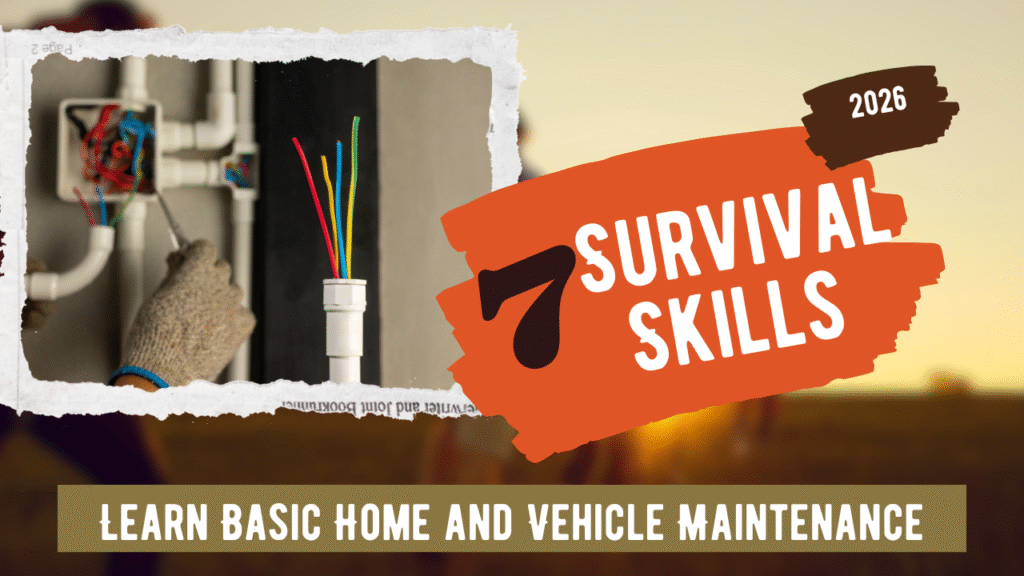
With inflation running high, every repair you can do yourself saves money. Tradespeople and mechanics are expensive in 2026.
- YouTube-learn: fixing leaking taps, bleeding radiators, unclogging drains
- Vehicle basics: oil check, coolant levels, air filter replacement, tyre changes
- Seasonal weatherproofing: re-caulking windows and doors before winter
- Minor appliance repair: most appliance faults are fixable with a screwdriver and a free repair guide
8. Survival Skills 2026: Establish a Neighbourhood Support Network
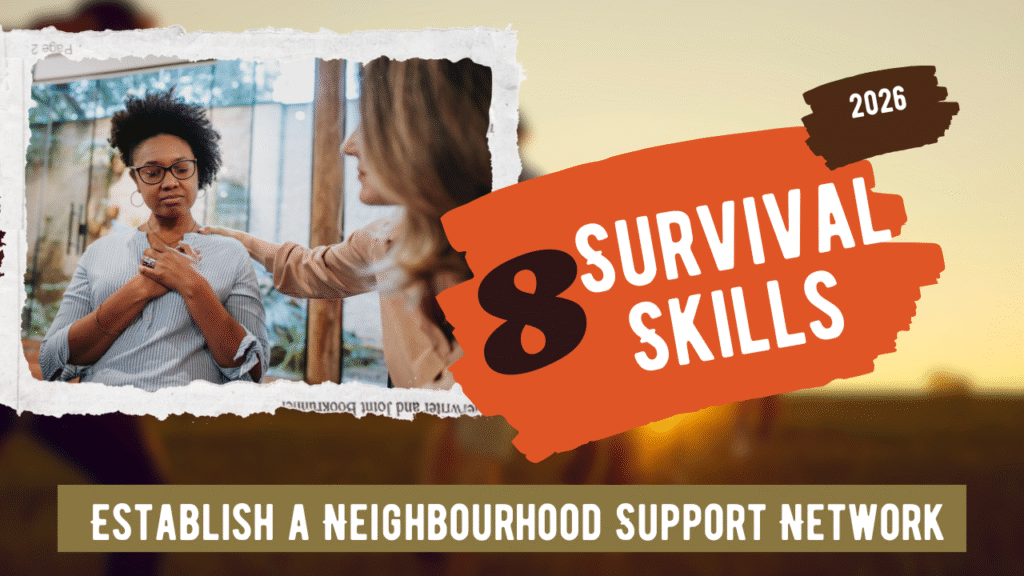
Community resilience is consistently the most underrated survival skill. People with strong local networks fare dramatically better in crises.
- Identify 3–5 neighbours willing to coordinate during emergencies
- Share bulk purchases to reduce per-unit costs (buying clubs)
- Skill-swap: a neighbour who can fix electrics, a plumber nearby, someone with a van
- Check on vulnerable neighbours elderly people and those with disabilities face the greatest risk in energy and food shocks
9.Survival Skills 2026: Manage Mental Health Under Sustained Pressure
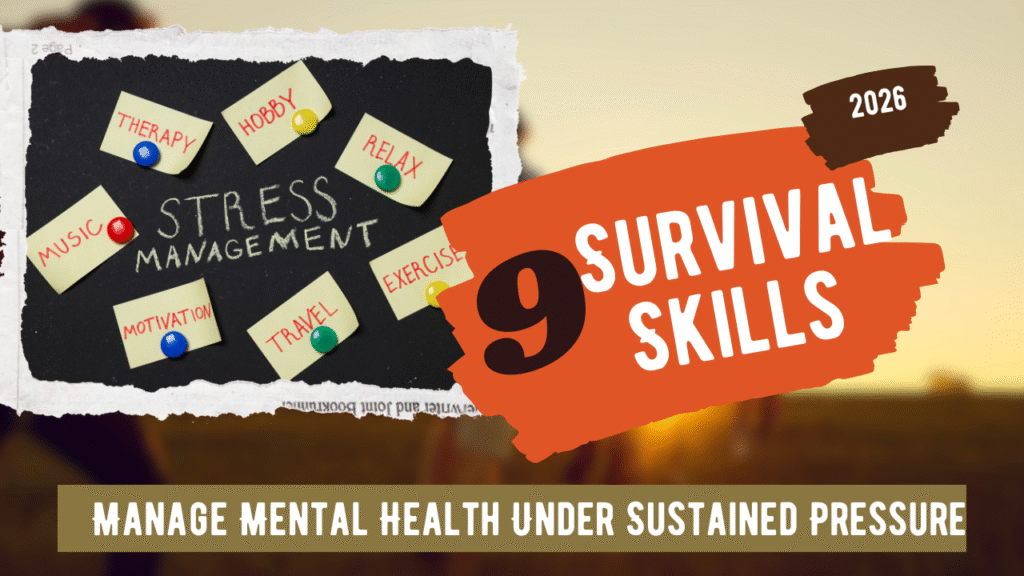
Economic crises are psychological crises too. Chronic financial stress elevates cortisol, disrupts sleep, and impairs decision-making exactly when you need to think clearly.
- Limit doomscrolling to 20 minutes of news per day more does not make you better prepared
- Maintain one low-cost social activity per week isolation worsens stress outcomes significantly
- Exercise outdoors: free, mood-improving, and builds physical resilience
- Practice a decision-making pause: when panicking about prices or news, wait 24 hours before making any major purchase or financial decision
10. Survival Skills 2026: Diversify Income Where Possible

Single-income households are the most vulnerable in inflation crises. Even a small secondary income stream meaningfully increases resilience.
- Freelance skills (writing, design, coding, tutoring platforms make this accessible
- Sell unused possessions decluttering and generating cash simultaneously
- Rent out a spare room or parking space if you have one
- Local odd jobs: gardening, delivery, childcare demand rises as professional service costs spike
11. Survival Skills 2026: Understand and Navigate Government Support
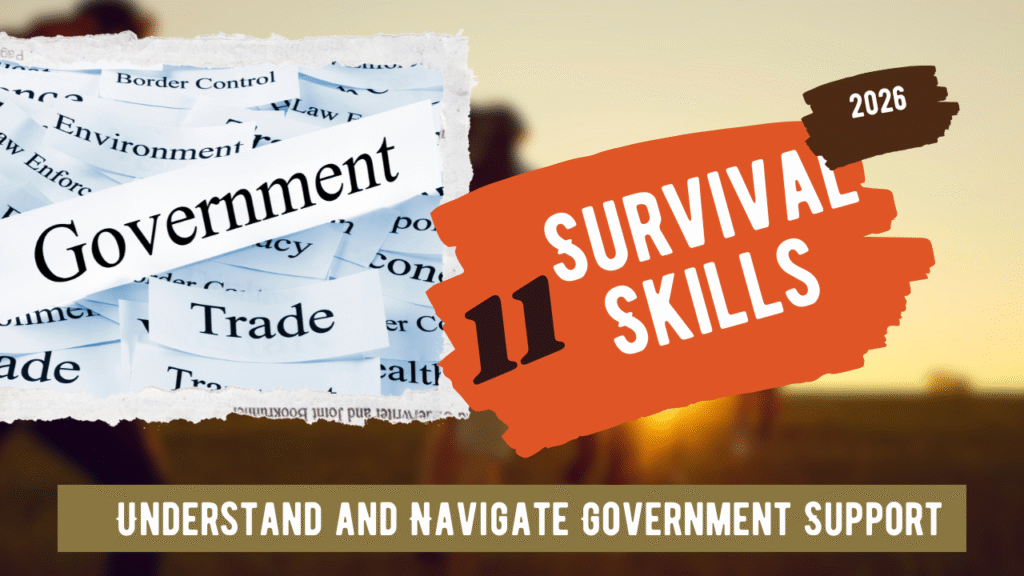
In 2026, governments worldwide are rolling out emergency consumer support in response to the energy crisis. Many eligible households do not claim what they are entitled to.
The IEA’s 2026 Energy Crisis Policy Response Tracker documents measures across dozens of countries including fuel subsidies, energy bill caps, and targeted cash transfers.
- Check your national and local government websites for crisis relief programmes
- Many countries have introduced targeted fuel and food support for low-income households — check eligibility actively
- Utility companies are legally required in many jurisdictions to offer payment plans — call before you fall behind
12.Survival Skill 2026: Build Long-Term Energy Independence
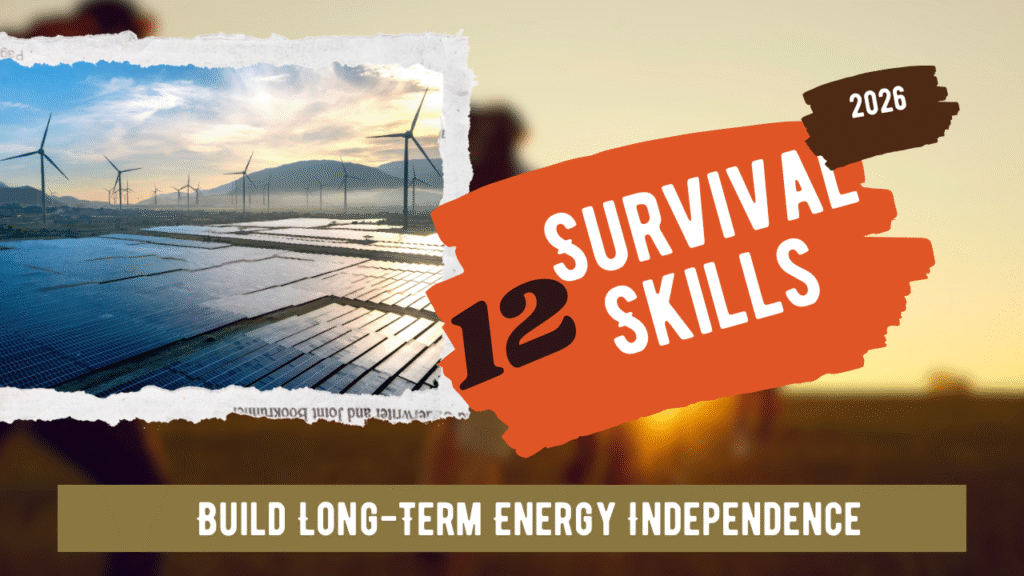
The 2026 crisis has accelerated a truth: households and nations dependent on imported fossil fuels are structurally vulnerable. Renewable energy options are now more financially competitive than ever.
- Solar panels: payback periods have dropped significantly with 2026 energy prices model your home’s potential
- Battery storage: even a small home battery smooths evening and outage vulnerability
- Insulation investment: the single highest-return energy improvement for most homes
- Heat pumps: where gas heating costs have spiked, heat pump economics now stack up for many households
Final Word on Survival Skills 2026
The crises of 2026 are real, serious, and ongoing. But history consistently shows that individuals and families who prepare practically and think clearly fare significantly better than those who freeze or panic.The survival skills 2026 demands are different from anything we have seen before
You do not need to do all 12 skills at once. Start with the three that feel most urgent for your household. Build from there. Each step you take is a reduction in vulnerability. Share this article with your family, your neighbours, and your community. In a crisis, the people around you are your most valuable resource
Frequently Asked Questions on Survival Skills 2026
1. How do I survive the 2026 fuel crisis as a family?
Cut fuel use immediately by working from home where possible, switching to public transport, and carpooling. Store 2–4 weeks of food and water, reduce energy consumption at home, and build an emergency cash fund of at least one month of expenses.
2. What survival skills are most important during high inflation in 2026?
The top five are: (1) bulk food storage, (2) home energy auditing, (3) basic home repair, (4) growing your own food, and (5) financial triage cutting non-essential spending to redirect cash toward essentials.
3. How much has fuel risen globally in 2026?
Since February 2026, fuel prices have risen more than 50% in countries like Malaysia and Pakistan, and over 85% in the UAE. In the US, oil briefly hit $119 per barrel in March 2026, driven by the closure of the Strait of Hormuz.
4.Is it safe to stockpile food during a war and fuel crisis?
Yes, building a 2 to 4 week emergency food supply of non-perishables is strongly recommended by emergency preparedness agencies worldwide. Focus on rice, lentils, canned goods, cooking oil, and shelf-stable protein.
5. How does the Strait of Hormuz closure affect everyday households?
The Strait carries about 20% of global oil consumption. Its disruption has pushed crude prices above $100/barrel, raising transport costs, food prices (via fertiliser shortages), and energy bills for households in Asia, Europe, and the Americas.

Pingback: 7 Proven Ways to Control Whiteflies on Cotton (2026)