
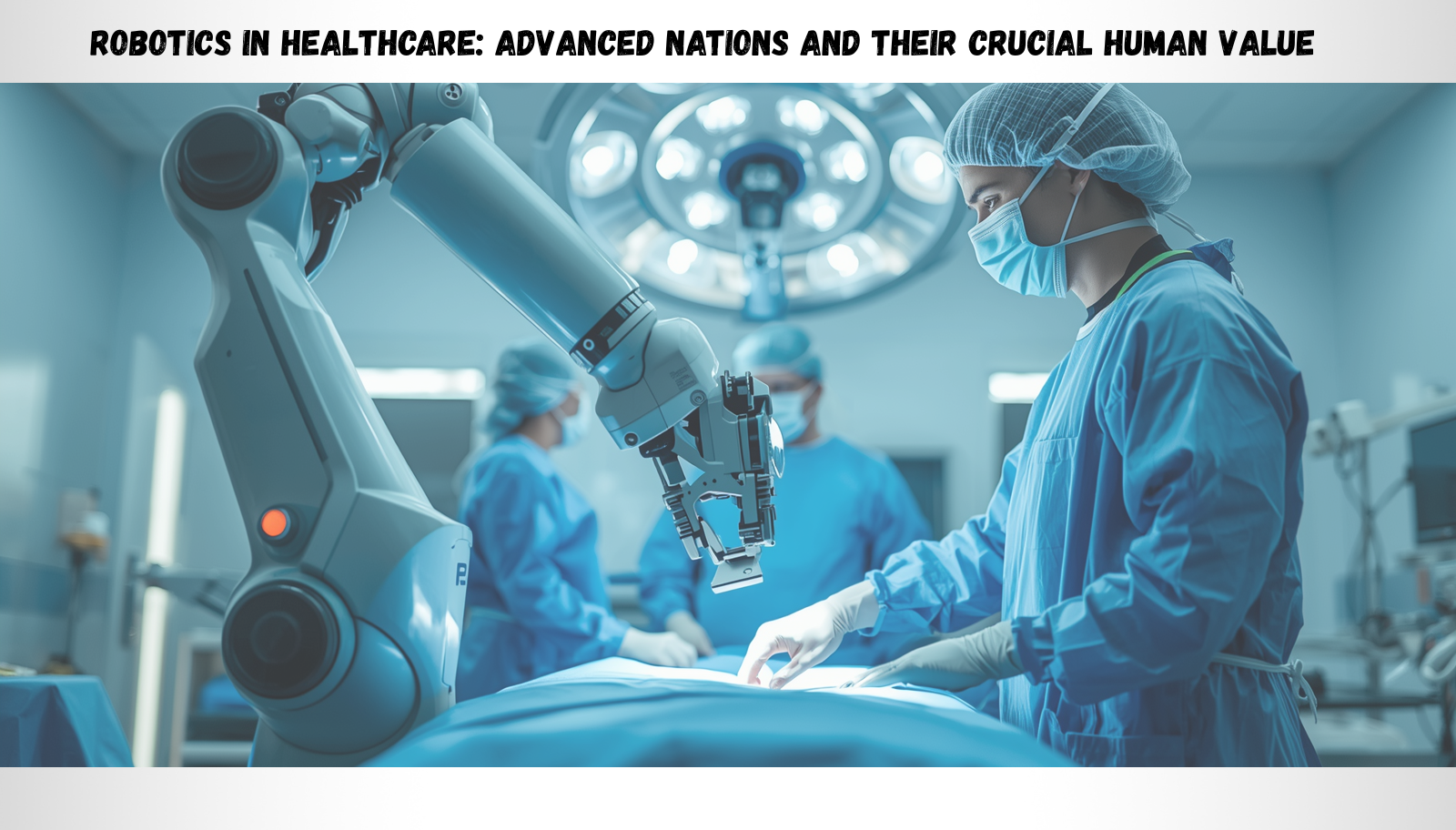
Robotics in healthcare is no longer a distant vision sitting inside a science fiction novel. “It is happening right now. Operating rooms, hospital corridors, and pharmacies across the most advanced nations are already living this reality. Machines are performing surgeries with zero tremors. Robots are delivering medications through hospital floors without a single human instruction.
What Is Robotics in Healthcare and Why Does It Matter Right Now
Robotics in healthcare refers to the use of intelligent robotic systems to assist, automate, or perform medical procedures, logistics, diagnostics, and patient care. These systems range from surgical robots guided by surgeons in real time to fully autonomous machines that operate without direct human input.
According to a 2025 Forbes report, more than 90% of major healthcare organizations in the United States and Europe are currently investing in robotic systems to improve diagnostics, surgery, and patient data management. The global medical robotics market was valued at $2.26 billion in 2018 and is now projected to reach $10.71 billion by the end of 2026.
Advanced Nations Leading the Robotics in Healthcare Revolution
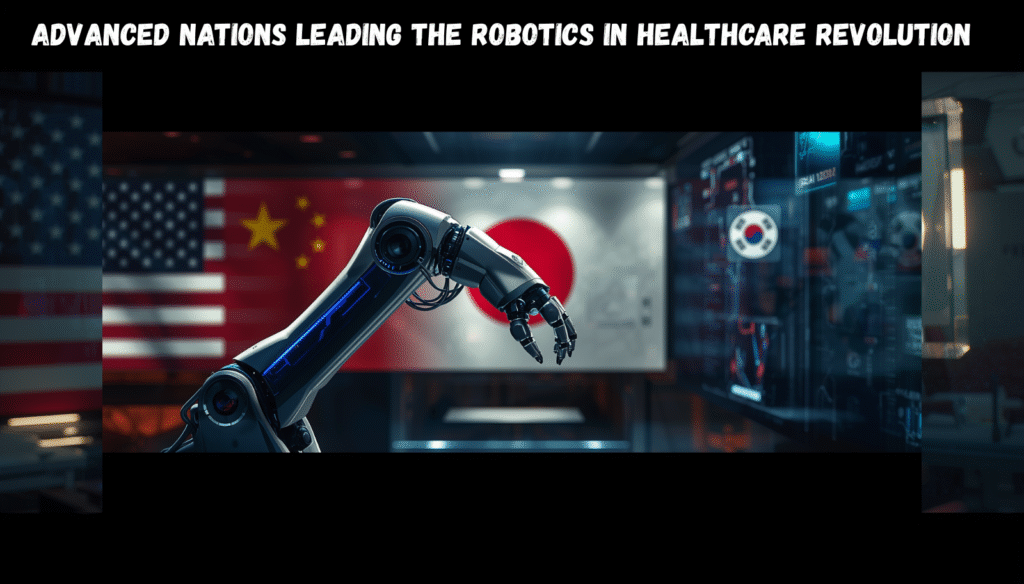
1. The United States Builds the Foundation Through Private Power
The United States remains the largest robotics in healthcare market on the planet. Enterprise AI and robotics adoption in the country exceeds 85%, with healthcare leading alongside finance and technology. The FDA has authorized 98 AI powered cardiovascular solutions alone.
Companies like Boston Dynamics, Agility Robotics, and Figure AI are redefining what a robot can physically accomplish inside a medical environment. Moxi, a hospital robot deployed at Medical City Dallas, autonomously navigates hospital floors, delivers lab specimens, collects soiled linens, and greets patients in corridors. Silicon Valley healthcare AI startups raised over $6 billion in just the first half of 2025, confirming that private investment is the engine powering American dominance in this space.
2. China Deploys Robotics in Healthcare at a Scale No Country Matches
In August 2025 the government launched its AI Plus policy, targeting deep integration across healthcare, manufacturing, and agriculture by 2027. Chinese AI agent doctors scored 93% accuracy in diagnostics at a virtual hospital in 2025. They surpassed human performance in controlled testing.”China installed 295,000 robots in 2024 alone, representing 54% of the entire global total for that year. In March 2026, Beijing’s International AI and Robotics Innovation Exhibition showcased a new generation of healthcare focused smart robots entering active clinical environments.
3. Japan Solves Its Demographic Crisis Through Eldercare Robotics
With one of the oldest populations on earth and a workforce that is steadily shrinking, Japan had no choice but to build a robotic care system. The country has already deployed over 15,000 eldercare robots in active daily use, not as experiments but as standard infrastructure inside care facilities.
Japan’s Moonshot R&D program, funded at $440 million through 2050, is specifically building robots that learn and evolve alongside the patients they serve. Moreover, what makes Japan’s approach uniquely valuable is its focus on emotional design. They are built for companionship, for recognizing behavioral patterns, and for responding to emotional states in ways that reduce isolation and anxiety among elderly patients.
Medical Fields That Robotics in Healthcare Has Already Taken Over
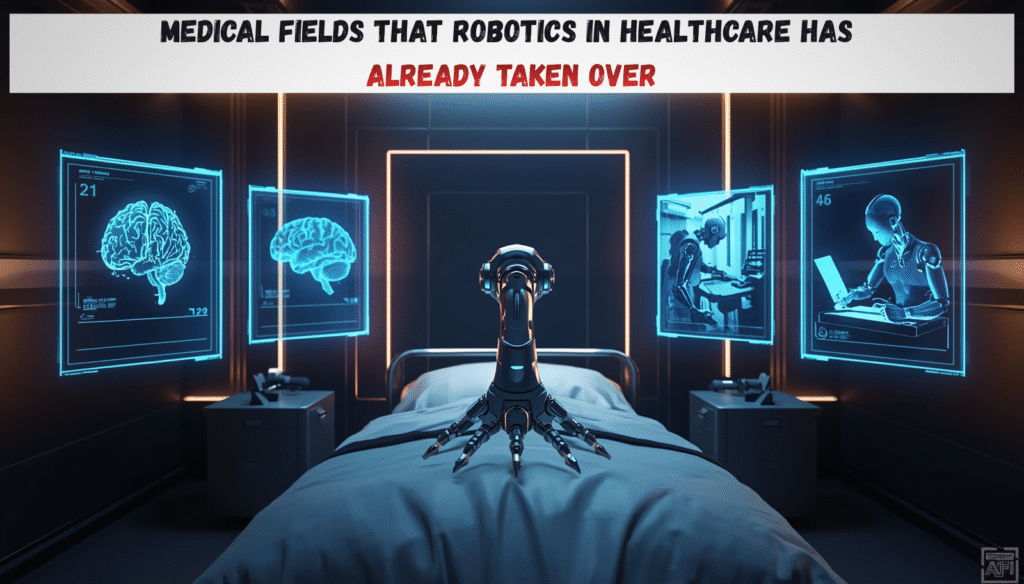
1. Medical Imaging and Radiology Are Now Machine Territory
This is the most complete automation story in all of robotics in healthcare. AI powered imaging systems now analyze X rays, MRIs, and CT scans with accuracy that matches or exceeds trained radiologists.
Deep learning models process millions of scan data points to detect tumors, fractures, bleeds, and abnormalities faster and with fewer errors than human specialists working under normal clinical conditions. In high volume hospitals, robotic imaging analysis is no longer supplementary. It is the primary workflow. The radiologist reviews what the machine flags rather than scanning from scratch.
2. Surgical Robotics Controls the Operating Room
The robotic assisted surgery market reached $10 billion in 2023 and is heading past $14 billion by 2026.Surgical robots now analyze tissue in real time. They recognize anatomical structures and guide surgeons toward the best path during complex procedures.. They eliminate hand tremors, improve incision precision, and reduce recovery times for patients significantly. Moreover, an important shift has occurred in how medical institutions view surgical robotics. Five years ago, AI guidance in an operating room felt experimental and risky. A less experienced surgeon assisted by robotic guidance can now perform procedures that previously required decades of specialized training
3 .Hospital Logistics Run Without Human Coordination
Hospital and pharmacy robots transport medications, deliver lab specimens, disinfect rooms using UV C radiation, and manage supply inventory completely autonomously. This segment is projected to form part of a $10.6 billion market by the end of 2026. These machines navigate hospital floors using AI mapping, adapt to foot traffic patterns, and complete hundreds of delivery cycles daily without a single instruction from staff.
4. Administrative Documentation Has Been Handed to Machines
Clinical documentation was consuming between 30 and 40% of physician working hours before robotic and AI automation stepped in. Natural language processing systems now transcribe patient appointments, generate clinical notes, code diagnoses for insurance billing, and flag documentation errors in real time.
As a result, doctors are spending more time with patients and less time staring at screens. This shift alone represents one of the most meaningful quality of life improvements that robotics in healthcare has delivered to the medical profession.
5.Drug Discovery Moves at Robotic Speed
AI and robotics have compressed the drug discovery process from a decade long journey into a matter of months. Robotic systems screen millions of molecular compounds, predict how they interact with biological targets, and identify failure points before expensive clinical trials begin. “Pharmaceutical companies without robotic discovery pipelines now fall structurally behind their competitors.”
The Critical Human Value That Robotics in Healthcare Cannot Replace
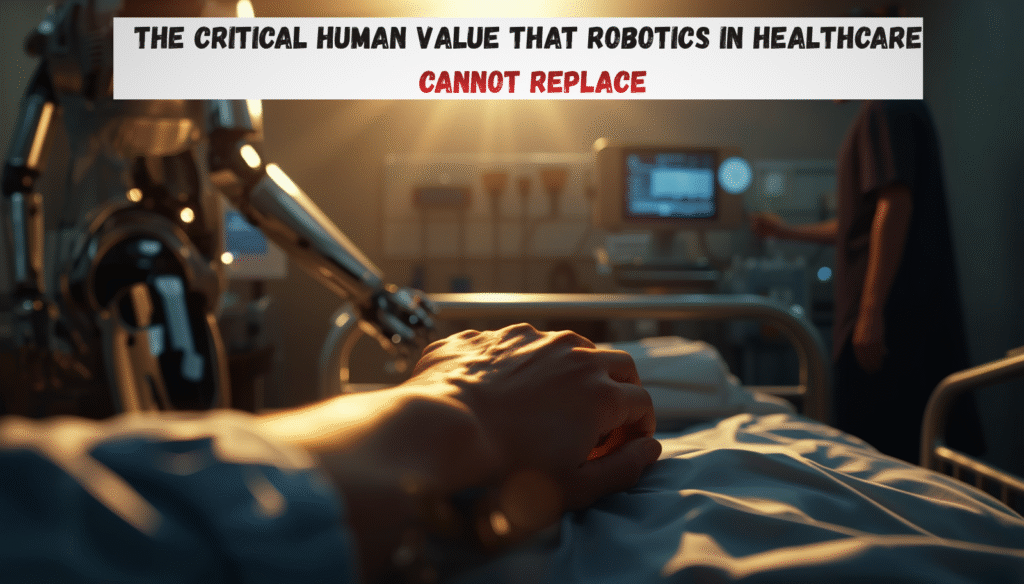
1. Mental Health Demands Human Presence Above All Else
In 2025, Illinois became one of the first US states to begin regulating how AI can be used in a mental health context, reinforcing a boundary that psychiatrists, therapists, and patient advocates insist must hold firm. AI cannot make autonomous mental health decisions without oversight from licensed professionals.
The reason goes deeper than regulation. Therapy is fundamentally a relationship. Robotic systems can support mental health through appointment scheduling, mood tracking between sessions, and crisis detection alerts. However, the therapeutic relationship itself remains irreplaceable human territory
2.Palliative Care Is About Dying With Dignity
No family wants a robot present when a loved one is dying. Palliative care deals in grief, fear, regret, love, and the profound human need to be witnessed at the end of life. While robotics in healthcare can assist with pain management coordination and decline prediction, the human presence at the bedside of a dying person is not a variable to be optimized. It is the entire point
3. Paediatric and Neonatal Care Requires Human Warmth
Children, particularly newborns, respond to human warmth in ways that directly affect developmental outcomes. Skin to skin contact, eye contact, voice recognition, and responsive human caregiving are not sentimental preferences. They are medically documented developmental necessities. AI monitoring in neonatal intensive care units can provide extraordinary data support, but the care itself must remain deeply and actively human.
4. Primary Care Needs Human Judgment That Machines Miss
Primary care physicians who listen carefully, notice what a patient did not say, and pick up on physical and emotional signals that fall outside a data field represent an irreplaceable layer of clinical intelligence.
Furthermore, just as robotics in healthcare is transforming medicine, technology is also reshaping agriculture. If you are interested in how AI is changing farming practices and pest control, read our previous piece on whitefly control in cotton crops to see how intelligent systems are solving problems across entirely different industries.
Fields That Still Need More Advancement in Robotics in Healthcare
1. Mental Health AI Needs Ethical Frameworks First
The demand for mental health services is catastrophic globally. The supply of qualified therapists falls far short of need. Robotic and AI assisted therapy tools designed to support patients between sessions, track emotional patterns, and detect early crisis signals are urgently needed. However, the ethical frameworks, regulatory oversight structures, and co design processes that would make these tools safe and effective have not yet been built at scale. This remains one of the most critical gaps in the entire field of robotics in healthcare
2. Rehabilitation Robotics Needs to Reach More Patients
Exoskeleton technology is advancing rapidly. The Atalante X, developed by Wandercraft, is the first self stabilizing exoskeleton and allowed a paralyzed man to carry the Olympic flame through Paris in 2024. Yrobot’s muscle armor uses AI to predict intended movement and provide real time physical assistance. However, these technologies remain expensive, limited in clinical availability, and far from standard practice. Stroke recovery, spinal cord injury rehabilitation, and degenerative disease management represent fields where affordable scalable robotics could transform millions of lives but have not yet done so
The Balance That Advanced Nations Are Still Trying to Get Right
Robotics in healthcare is not the enemy of human medicine. It is the infrastructure that could make human medicine more humane by removing the mechanical burden from the people who provide it. When a robot handles logistics, documentation, imaging analysis, and surgical precision, a doctor becomes free to do what only a doctor can do which is to sit with a patient, listen carefully, and make a decision that accounts for the full complexity of a human life.
According to the World Economic Forum, the robotic assisted surgery market is expected to grow beyond $14 billion by 2026, reinforcing that this transformation is accelerating rather than slowing. Read more about global healthcare robotics trends at the World Economic Forum.
For the latest research on AI driven medical robotics across surgical innovation and rehabilitation, this peer reviewed study published in PMC in 2026 provides the most comprehensive scientific overview currently available.
Frequently Asked Questions About Robotics in Healthcare
1. What countries are leading in robotics in healthcare?
The United States, China, Japan, South Korea, Germany, and the UAE are the top nations driving robotics adoption in healthcare through national investment, research programs, and large scale hospital deployment.
2. Which medical fields have been taken over by robotics?
Medical imaging, surgical assistance, hospital logistics, administrative documentation, and drug discovery have seen the deepest robotic integration, with machines now performing tasks once exclusively done by trained specialists.
3. Can robotics in healthcare replace human doctors completely?
No. Fields like mental health, palliative care, pediatric care, and primary diagnosis still require emotional intelligence, empathy, and human judgment that robotics cannot replicate
4. How is robotics in healthcare different from AI in healthcare?
Robotics involves physical machines performing tasks in the real world, while AI refers to software intelligence. In modern healthcare, both work together, where AI powers the decisions and robots carry out the actions.
5. Is robotics in healthcare safe for patients?
Yes, when properly regulated. Robotic systems reduce human error in surgery, improve precision in diagnostics, and enhance consistency in drug delivery, all of which directly improve patient safety outcomes.
References
- Forbes (2025). AI and Robotic Systems in Healthcare Organizations. https://www.forbes.com
- World Economic Forum (2025). Six Ways Robotics Are Transforming Healthcare. https://www.weforum.org/stories/2025/06/robots-medical-industry-healthcare/
- PMC Research (2026). AI Driven Revolution of Medical Robotics Across Surgical Innovation and Rehabilitation. https://pmc.ncbi.nlm.nih.gov/articles/PMC12968330/
- Ortho Spine News (2025). Artificial Intelligence in Healthcare Market to Surge Across USA Europe APAC and Saudi Arabia by 2035. https://orthospinenews.com/2025/11/07/artificial-intelligence-in-healthcare-market-to-surge-across-usa-europe-apac-and-saudi-arabia-by-2035/
- VinUni (2025). Transforming Patient Care Through AI and Robotics in Healthcare. https://vinuni.edu.vn/ai-and-robotics-in-healthcare/
- World Health Expo (2026). Five Health Tech Trends to Watch in 2026. https://www.worldhealthexpo.com/insights/medical-technology/five-health-tech-trends-to-watch-in-2026
- Nurse.org (2026). Humanoid AI Robots Being Tested in Hospitals. https://nurse.org/articles/nurse-robots/
- Digital Health Insights (2026). In 2025 What Have We Learned About AI in Healthcare. https://dhinsights.org/news/in-2025-what-have-we-learned-about-ai-in-healthcare
- Microsoft AI Diffusion Report (2026). Global AI Adoption by Country. https://www.allaboutai.com/resources/ai-statistics/global-ai-adoption/
- Robot Magazine (2025). Robotics R&D Race Which Countries Invest the Most. https://www.robot-magazine.fr/en/robotics-rd-race-which-countries-invest-the-most-in-the-future-of-robots/
- International Federation of Robotics (2025). World Robotics Report 2025. https://eu.36kr.com/en/p/3483537185168257
- coloruncover.com. Whiteflies on Cotton Control. https://coloruncover.com/whiteflies-on-cotton-control/

Pingback: Clinical AI: What Are the Best Examples in Decision Support?