
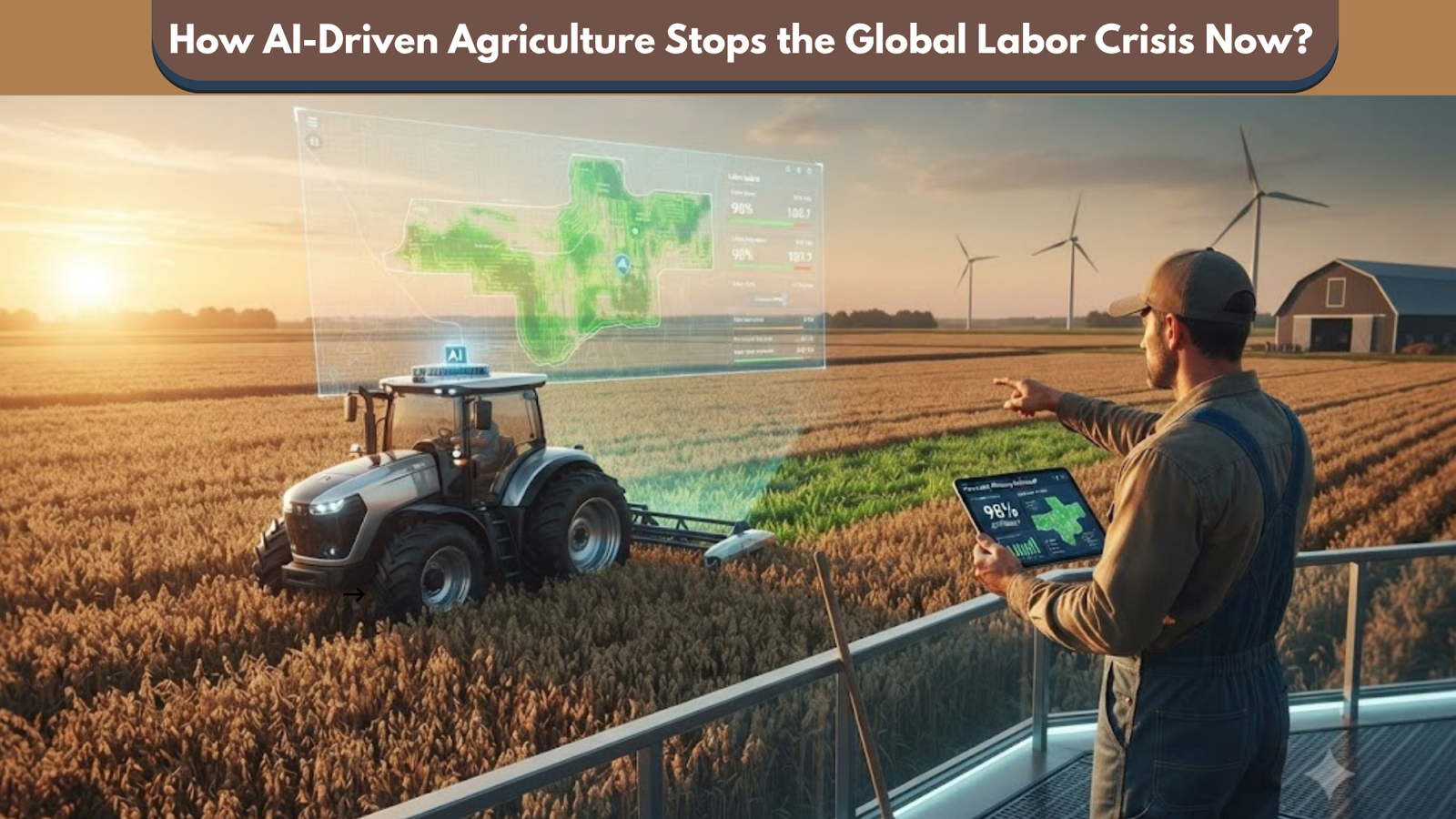
AI-driven agriculture is quickly becoming the clearest answer to a labor shortage that has been building for years. Farms across the world are running out of hands. For example, growers in California’s fruit orchards and rice paddies in Southeast Asia are struggling to find enough workers. Rural populations are aging. Younger generations are moving to cities instead of staying on the farm. As a result, seasonal migration programs can no longer fill the gap. This is where AI-driven agriculture steps in. It is not a futuristic luxury. Instead, it is the most realistic path out of a crisis that threatens global food security.
This post breaks down why AI-driven agriculture has moved from “nice to have” to “non-negotiable.” It also explains how the technology works on the ground. Finally, it looks at what this shift means for the future of farming and food supply.
What Is Driving the Global Agricultural Labor Crisis?
Several forces are converging at once. In fact, OECD research on labor shortages in the agro-food sector shows this decline is steady across many countries, not just a short-term dip. Here are the main drivers:
- Aging farm workforces. Major agricultural economies have fewer young people entering the profession.
- Urban migration. Rural workers are moving toward cities for higher wages and steadier work.
- Tighter immigration policies. Many countries that once relied on migrant farm labor now restrict it further.
- Rising wage costs. These squeeze already-thin margins for growers.
- Low-appeal, physically demanding work. Farming struggles to compete with other industries for talent.
None of these pressures are temporary blips. Instead, they are structural shifts. That is why patchwork fixes, such as short-term visa programs or wage increases, have not solved the problem. Therefore, the industry is turning to automation and intelligent systems instead.
What Is AI-Driven Agriculture, Exactly?
AI-driven agriculture uses artificial intelligence, machine learning, computer vision, robotics, and sensor networks. Together, these tools perform or support tasks once done only by human farm labor. In short, this includes:
- Autonomous tractors and harvesters. These plant, weed, and pick crops without a human driver.
- Computer vision systems. These identify ripeness, detect pests, and spot disease early.
- Precision agriculture platforms. These use satellite and drone data to fine-tune water, fertilizer, and pesticide use.
- Robotic pickers. These handle delicate crops like strawberries, apples, and lettuce.
- Predictive analytics. These forecast yield, labor needs, and weather risk weeks ahead of time.
Together, these tools form a layer of “digital labor.” It can run around the clock. It never calls in sick. Most importantly, it scales up or down with the season.
Why AI-Driven Agriculture Is the Only Realistic Long-Term Solution
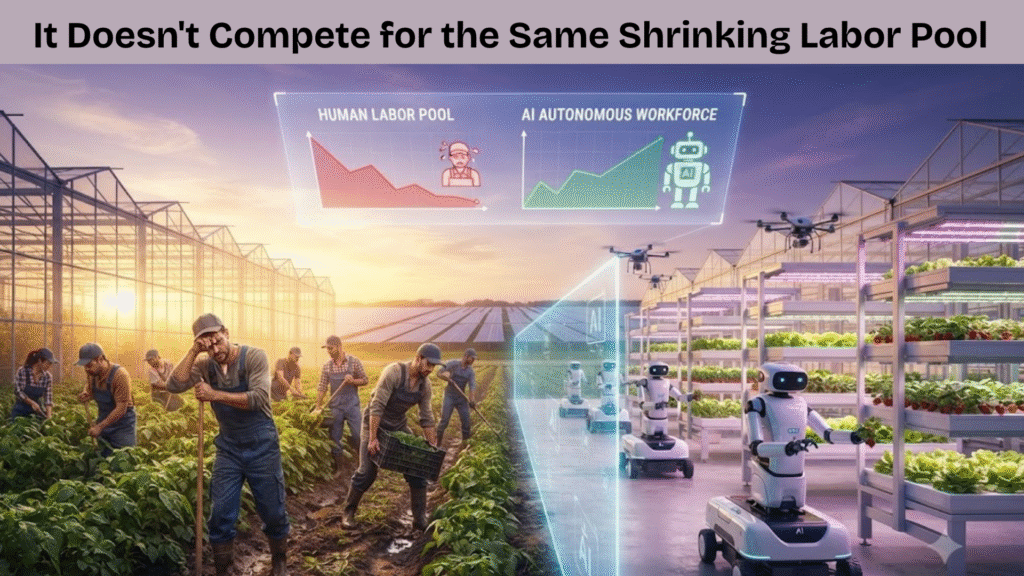
Every other fix still depends on convincing more people to do hard seasonal work. This includes higher wages, better housing, and expanded visa programs. However, AI-driven agriculture sidesteps that competition entirely. It automates the tasks people are least willing to do.
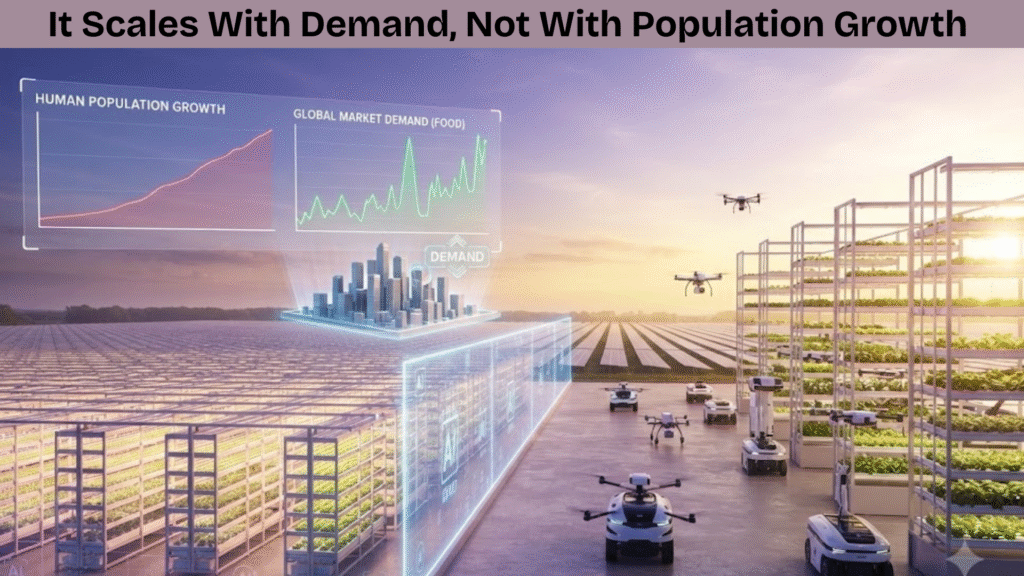
Global food demand is rising faster than the rural workforce can grow. Meanwhile, robotic and AI-assisted systems can be deployed at scale in ways human recruitment simply cannot match. This matters most during short, intense harvest windows.
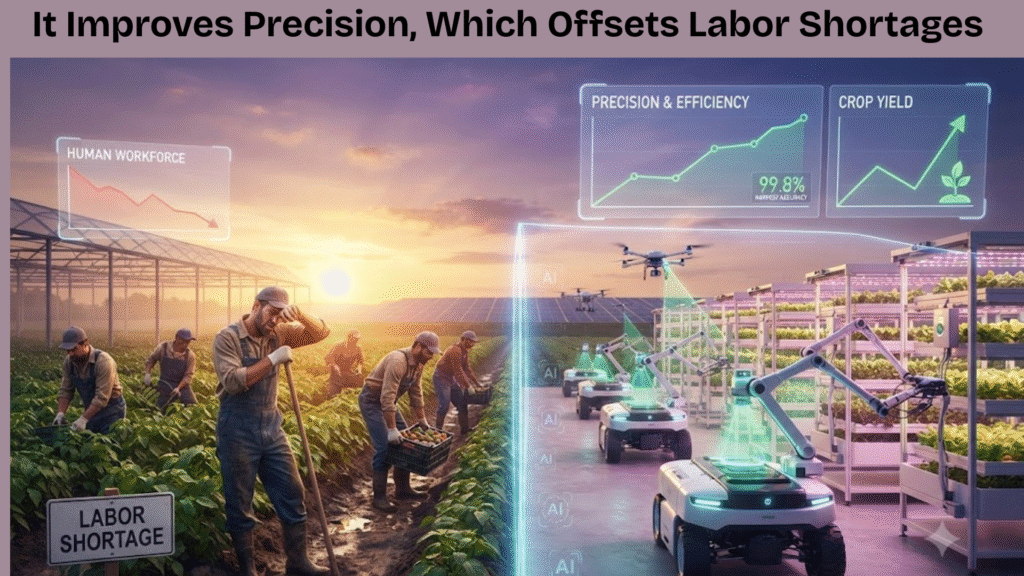
Fewer hands does not have to mean lower yields. Precision agriculture is a core piece of AI-driven agriculture. It reduces waste. It also targets inputs more accurately. As a result, farms often produce healthier crops with less manual monitoring. According to the USDA Economic Research Service, mechanization has been reducing the need for manual farm labor for decades, and precision tools continue that same trend today.
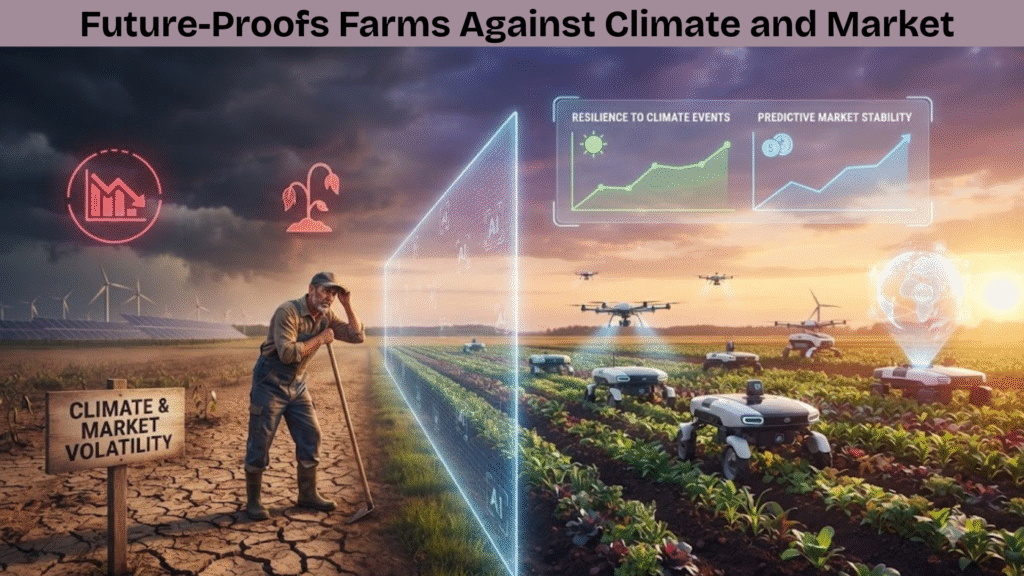
AI systems monitor soil, weather, and crop health in real time. Because of this, farms can react faster to droughts, pest outbreaks, or shifting prices. This is a level of resilience that a stretched-thin labor force simply cannot provide alone.
Will AI Replace Farmers Entirely?
This is one of the most common questions people ask. The direct answer: not entirely, and not anytime soon. Instead, think of AI-driven agriculture as an amplifier for farmers, not a replacement. Farmers still make the strategic calls. They decide what to plant, when to sell, and how to manage land long-term. Meanwhile, AI and robotics absorb the repetitive, physically demanding tasks that are hardest to staff.
For a deeper look at this exact question, including where automation is likely to take over completely, see our related breakdown: Will AI Replace Farmers?
Common Questions About AI-Driven Agriculture
1. What is AI-driven agriculture?
It is the use of artificial intelligence, robotics, and data-driven tools to automate and optimize farming tasks. This includes planting, harvesting, irrigation, and pest detection.
2. Why is AI important for solving the farm labor shortage?
Because it automates the hard-to-staff, physically demanding tasks. As a result, farms no longer need to depend on an already-shrinking labor pool.
3. Is AI-driven agriculture only for large farms?
No. Large operations adopted it first because of cost. However, smaller farms increasingly use affordable drone, sensor, and app-based AI tools too.
4. What jobs in farming are most likely to be automated first?
Repetitive tasks go first. Examples include weeding, fruit picking, sorting, and irrigation monitoring. As a result these roles are the hardest to staff and the easiest to standardize with robotics.
5. Does AI-driven agriculture reduce the need for farmers?
It reduces the need for manual seasonal labor.However, not for farmers themselves. Instead, farmers shift toward managing and interpreting AI systems.
6. How does AI-driven agriculture affect food prices?
It can help lower production costs over time. This happens through reduced labor costs and less waste. That said, upfront technology costs remain a barrier for some producers.
The Bottom Line
The global agricultural labor crisis is not a temporary shortage. Instead, it is a structural shift that traditional recruitment and policy tools have failed to reverse. AI-driven agriculture offers something no other solution does. It keeps farms productive without depending on a workforce that keeps shrinking. It will not erase the farmer’s role. However, it will redefine it, turning growers into managers of intelligent systems rather than the sole source of manual labor.
In short, farms that adapt early to AI-driven agriculture will not just survive the labor crisis. They will be the ones still standing when it is over.
Want to explore the flip side of this conversation? Read our companion piece, Will AI Replace Farmers?, for a closer look at where human expertise remains irreplaceable on the farm.
