
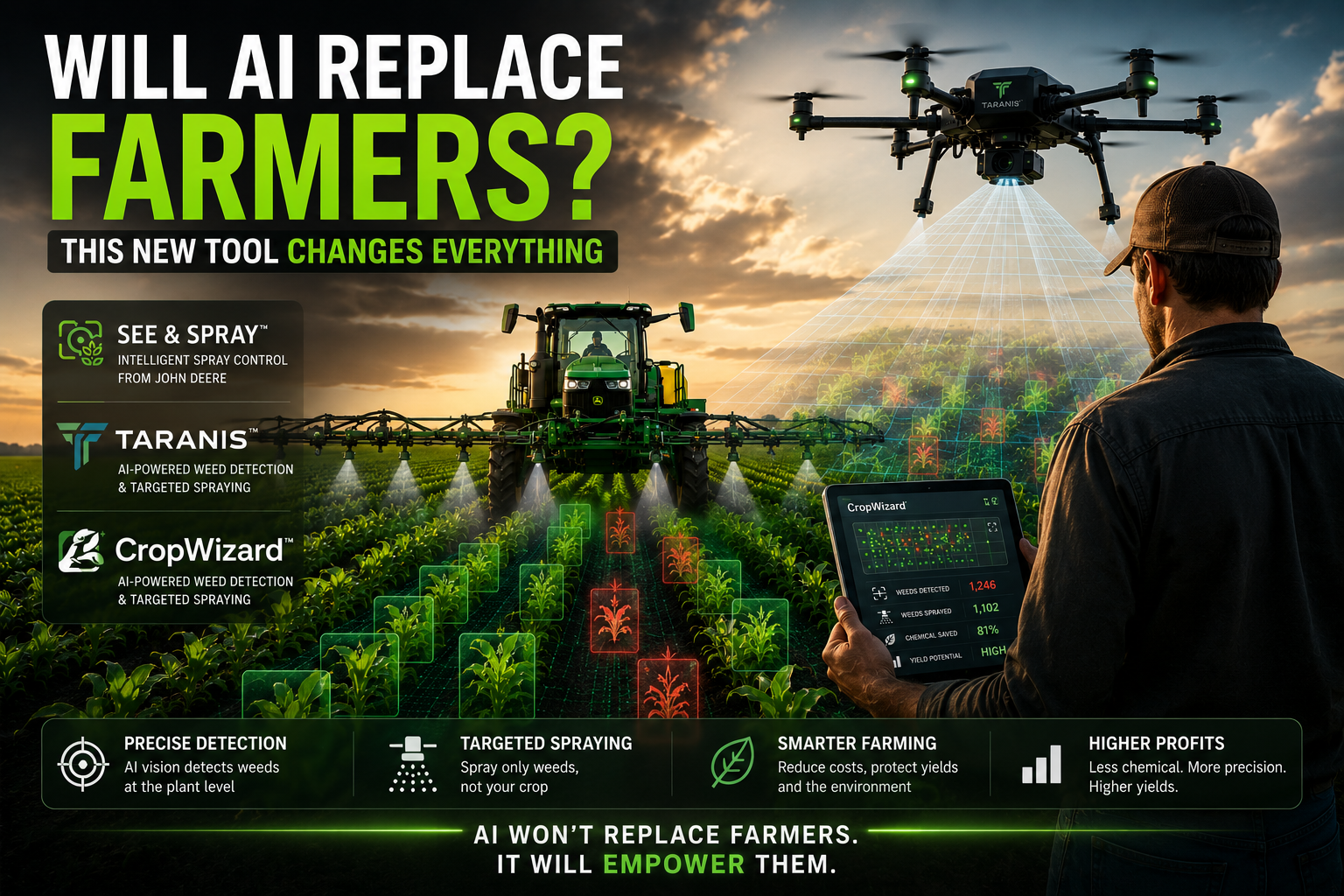
Many people ask this question today. Will AI replace farmers as technology grows? This is a major worry for local growers. New data shows that there were 2.4 million open agricultural jobs in 2024, and 56% of farmers reported real labor shortages. Because of this, the face of farming is changing fast. Food production requires automated solutions to survive the labor crunch.
But the truth is surprising. These new tools are not here to remove humans. Instead, a big change is happening right now. New technology serves as a helpful assistant. It works like a partner that talks to you. AI is absorbing the routine paperwork and reporting. This makes the actual human role more valuable, not less. For example, if you want to see how computer vision stops crop outbreaks before they spread, read our guide on how to instantly destroy bugs with AI pest detection.
Will AI Replace Farmers? The Rise of Specialized Chatbots in the Field
New conversational tools change how growers get help. Instead of reading hard charts, you can now text your field for answers. Here is a detailed breakdown of three cutting-edge tools changing the market.
1. CropWizard
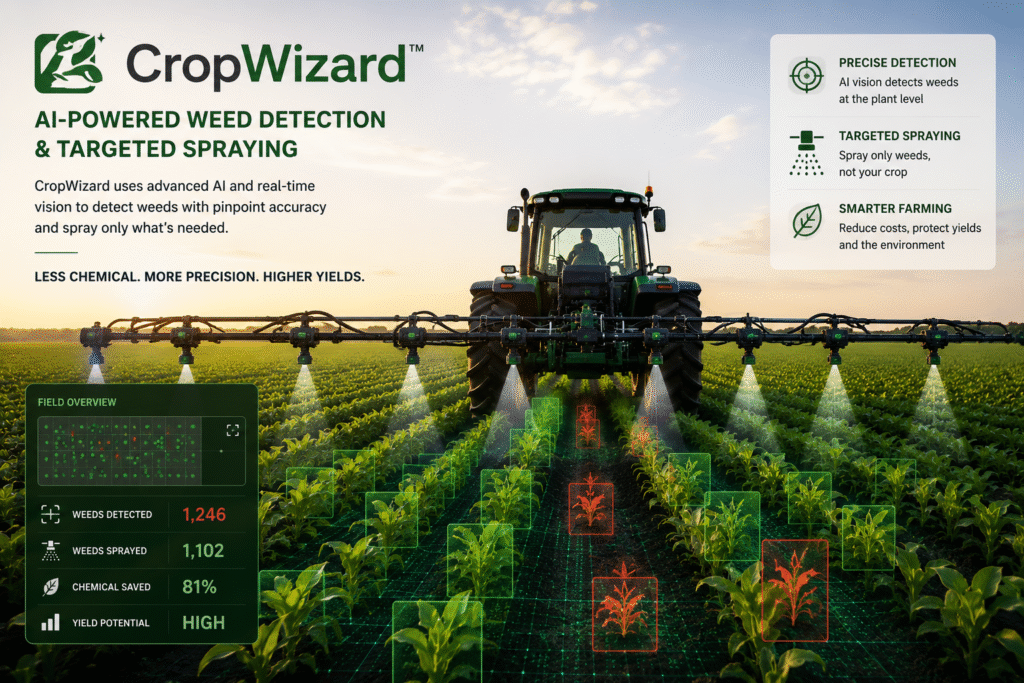
CropWizard is a specialized AI chatbot built by the University of Illinois designed specifically for agricultural use. Instead of training on general internet data, it draws heavily on research-backed data and crop science to keep answers accurate.
- Strengths: It is completely free to use, removing financial barriers for small and mid-size farms. The interface has a very low learning curve, allowing farmers with no tech background to easily upload photos of sick leaves or pests for an instant, science-backed diagnosis. It is also available 24/7.
- Weaknesses: It has no physical field presence, meaning it cannot touch the dirt, smell the crops, or notice subtle plant stress that a camera misses. Blurry or poorly lit photos can also easily lead to an incorrect or vague diagnosis.
- Opportunities: It can scale up to support emerging farmers globally, acting as an instant, accessible digital agronomist to lower initial consulting costs.
- Threats: It completely depends on a stable internet connection. Because of this, bad cellular service in remote rural areas can limit its usefulness exactly where it is needed most.
2. John Deere See & Spray
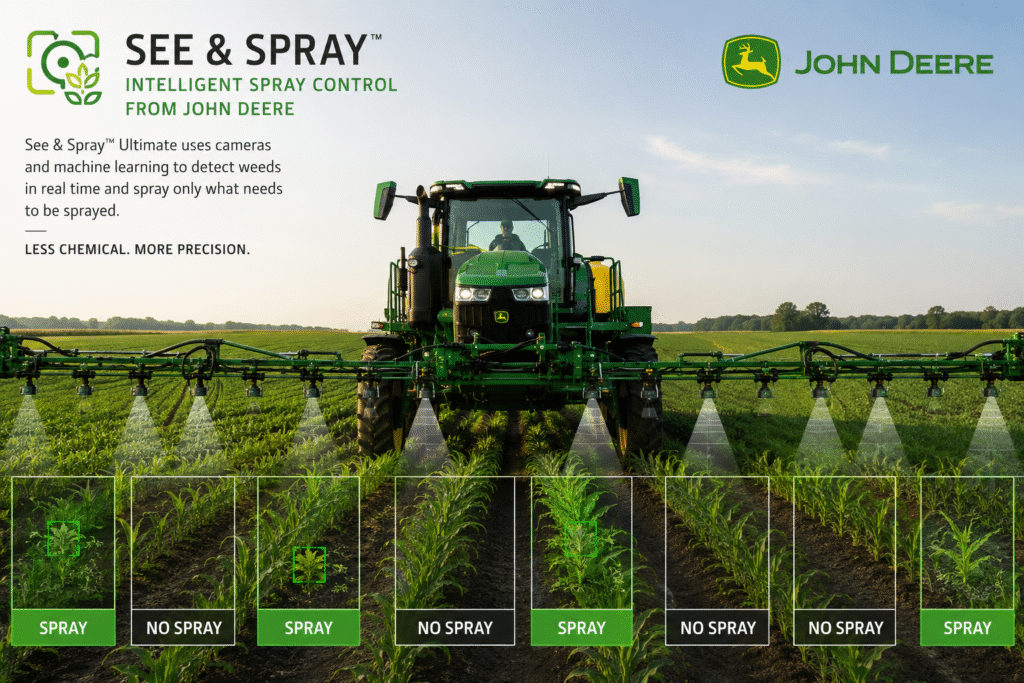
This heavy field machine uses advanced computer vision, smart cameras, and machine learning to revolutionize chemical applications during field passes.
- Strengths: It is highly efficient. It identifies individual weeds down to the millisecond while driving and triggers nozzles to drop herbicide only on the weeds, cutting non-residual chemical waste by an average of 50% to 70%.
- Weaknesses: The upfront capital cost to buy or upgrade to this hardware is exceptionally high. Furthermore, it demands regular technical maintenance, clean lenses, and specialized support if a sensor fails.
- Opportunities: It can integrate with wider fleet tracking systems to provide real-time weed mapping data across thousands of acres, helping farmers track field resistance trends over time.
- Threats: Rapid software changes or sudden updates can disrupt older equipment lines, forcing farmers into restrictive upgrade cycles.
3. Taranis
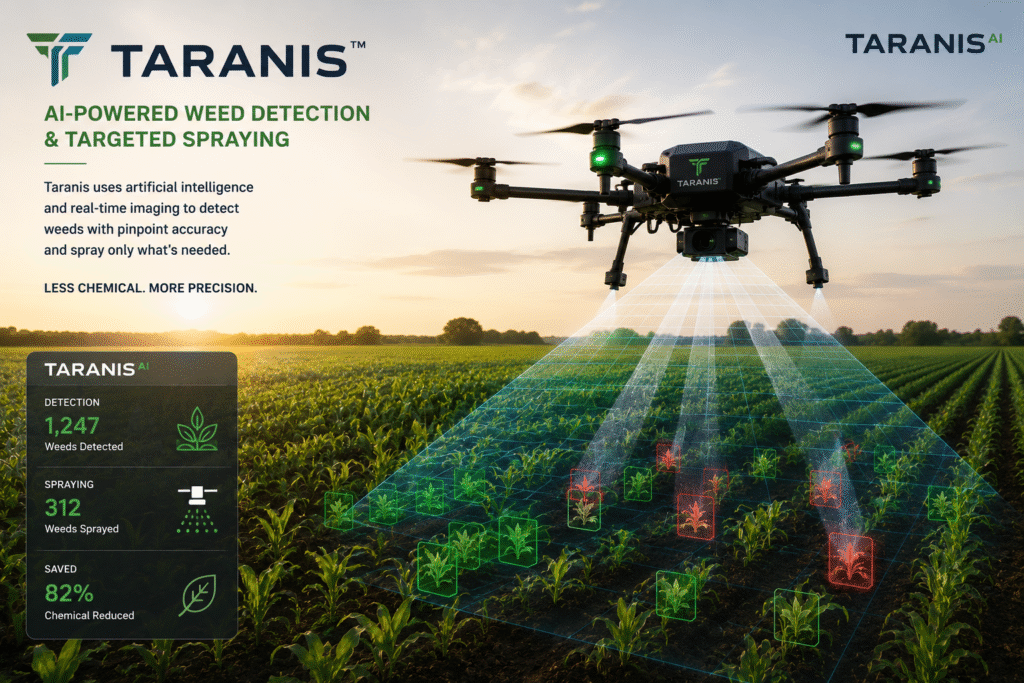
Taranis is an advanced crop intelligence platform that utilizes high-resolution aerial photos captured by drones, planes, and satellites to monitor field health.
- Strengths: It scouts massive fields in minutes, processing millions of pixels to find tiny leaf changes and insect leaf damage long before the human eye can spot them from the ground.
- Weaknesses: It cannot physically fix the problems it finds. While it provides accurate warnings, the actual labor and field execution still fall completely on the human crew.
- Opportunities: It can partner with local agritech insurance platforms to provide un-falsifiable crop damage data after severe storms, speeding up claim payouts.
- Threats: Extreme weather disruptions, thick cloud cover, or heavy smoke can block clear satellite or drone views, leaving a blind spot when a farmer might need visibility most.
Will AI Replace Farmers? How Smart Machines and Cutting-Edge Field Tools Really Work
Computers are efficient at counting pixels. However, they do not understand nature. Nature changes fast and can be chaotic. A computer cannot match human intuition and years of real experience. The table below shows the clear divide between machine power and human value.
| Farm Task Area | What AI Does Best | What Only Humans Do |
|---|---|---|
| Data & Scouting | Scans millions of data points fast | Uses deep gut feelings and land judgment |
| Weather Response | Predicts macro weather patterns | Handles live crisis response in mud |
| Daily Operations | Calculates chemical mix ratios | Physically fixes a broken hydraulic line |
Therefore, the old fear that will AI replace farmers is wrong. Robots cannot replace the human heart, mind, and final accountability.
Will AI Replace Farmers? The Final Verdict: Adapting to the New Era
So, will AI replace farmers in the future? The short answer is no. The tools are here to help you, not replace you. But the market is moving fast. A farmer who uses AI will easily do better than a farmer who does not. Embracing these tools is the best way to save time, protect your crops, and keep your business strong. Therefore, the real focus is not whether AI will replace farmers, but how you can use this tech to secure your legacy.
Frequently Asked Questions
1. Will AI replace farmers anytime soon?
No, AI will not replace human farmers. Farming needs human problem-solving, land judgment, and quick changes that a computer cannot match.
2.Is CropWizard AI free for everyone?
Yes, CropWizard is completely free. It was built by the University of Illinois to help growers get quick, science-based help on their phones.
3. How do smart field sprayers save money?
Smart sprayers use cameras to find weeds. They only spray the weeds, which cuts chemical costs by up to 70%.
References
CropWizard Official AI Portal – UIUC.chat Documentation.
John Deere Sprayers & Precision Agriculture Technology – John Deere 400 & 600 Series.
Taranis Crop Intelligence Platform Overview – Google Cloud Customer Studies.
Taranis Review & Technical Analysis 2026 – SectorPunk.

Pingback: No Signal? How Edge Computing in Agriculture Saves Farms
Pingback: How AI-Driven Agriculture Stops the Global Labor Crisis Now?