
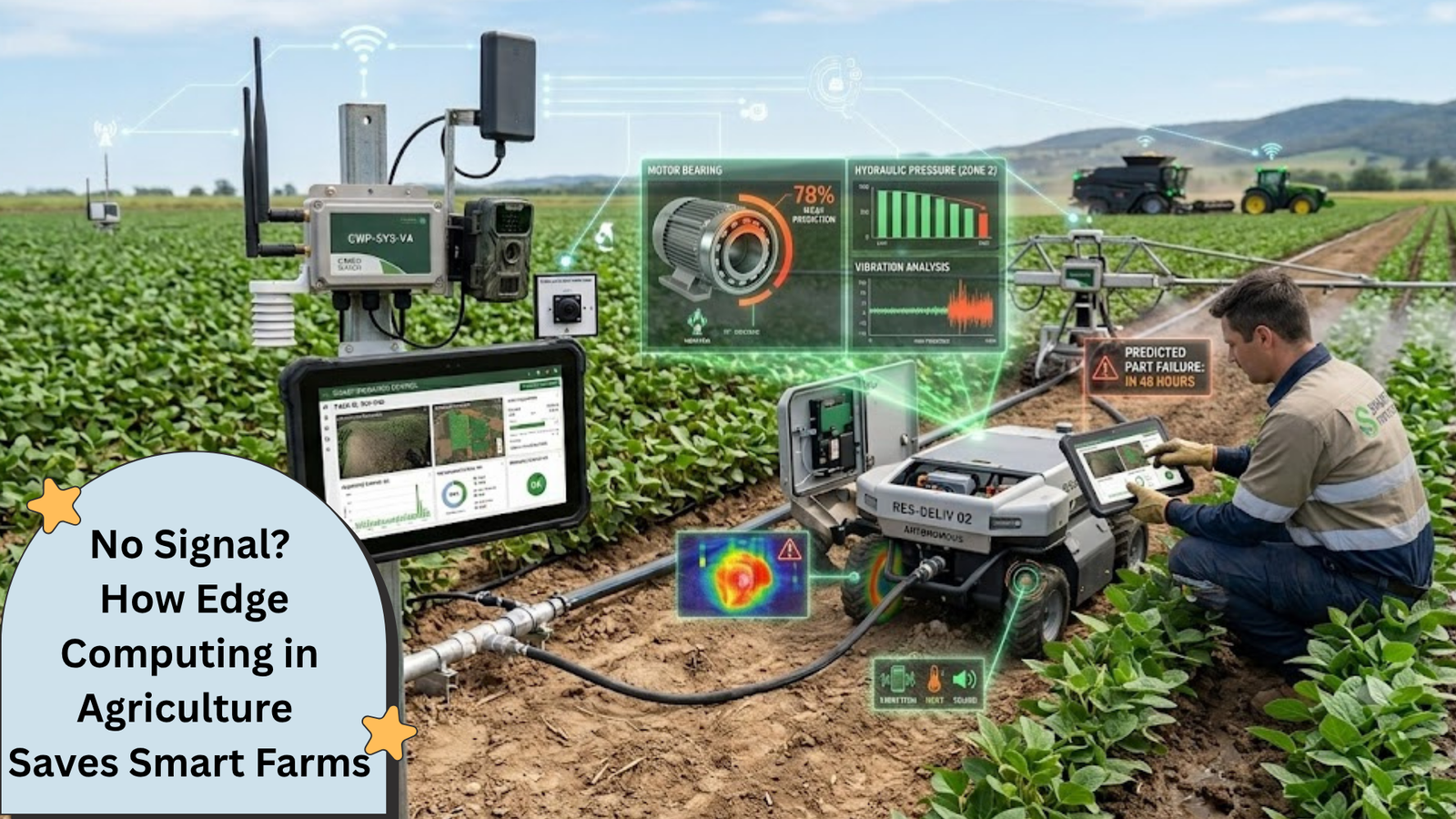
Picture this. A sensor detects a pest outbreak in a soybean field. However, the nearest cell tower is three miles away. So, the connection keeps dropping. In the past, this delay could cost an entire harvest. Today, Edge Computing in Agriculture solves this exact problem. Specifically, it processes data right where it’s collected. As a result, farms keep working even when the signal doesn’t.
This shift matters more than ever. As a result, farmers no longer have to choose between smart technology and unreliable rural internet. Instead, they get both. This connects to a bigger question worth exploring too: will AI replace farmers? In this article, we’ll break down what Edge Computing in Agriculture is, why it’s spreading fast, and how it’s reshaping farms in 2026.
What Is Edge Computing in Agriculture?
Edge Computing in Agriculture means processing farm data locally, on or near the device that collects it. For example, a soil sensor, a drone, or a tractor computer analyzes information on the spot. Consequently, the data doesn’t need to travel to a distant cloud server first.
This is a major shift from older systems. Traditionally, farm data went to the cloud for analysis. Then, results came back to the farm. However, because rural connectivity is often weak, this round trip could take minutes. Sometimes, it failed completely. Now, with edge computing, decisions happen in milliseconds, right in the field.
In short, the “edge” is the field itself. Therefore, the technology fits the reality of farming: vast, remote, and often disconnected.
Why Rural Connectivity Still Struggles
Farms are big. Signal towers are not always close by. In fact, over 22% of rural Americans still lack reliable broadband. For Tribal lands, that number climbs past 27%. In cities, it’s just 1.5%. So, the gap is huge. Meanwhile, farms without steady connectivity often can’t run basic precision-ag tools at all.
For instance, one Virginia farmer put it simply. His land has dead zones. So, his GPS mapping and remote sensors just don’t work. Yet his neighbors, with better signal, use these tools every day. That’s not just inconvenient. It’s a real competitive disadvantage.
Fortunately, things are improving. Rural broadband use jumped from 58% in 2018 to 71% in 2025. Nearly $47 billion in federal funding helped make that happen. Still, many farmland areas remain patchy. This is exactly where Edge Computing in Agriculture steps in.
How Edge Computing in Agriculture Actually Works
Edge devices sit close to the source of data. These include soil probes, weather stations, drones, and onboard tractor computers. Because processing happens locally, farms gain three key advantages.
- Speed: Decisions happen in real time, not after a cloud round-trip.
- Resilience: Operations continue even during outages or dead zones.
- Efficiency: Only useful, summarized data gets sent to the cloud, saving bandwidth.
Additionally, edge systems filter and sort information first. As a result, only the useful insights get sent to the cloud. This matters a lot. Most farms simply don’t have the bandwidth to stream raw data nonstop.
Real Use Cases Already Changing Smart Farms
Edge Computing in Agriculture isn’t theoretical anymore. It’s active across several parts of modern farm operations.
1. Crop and Pest Monitoring
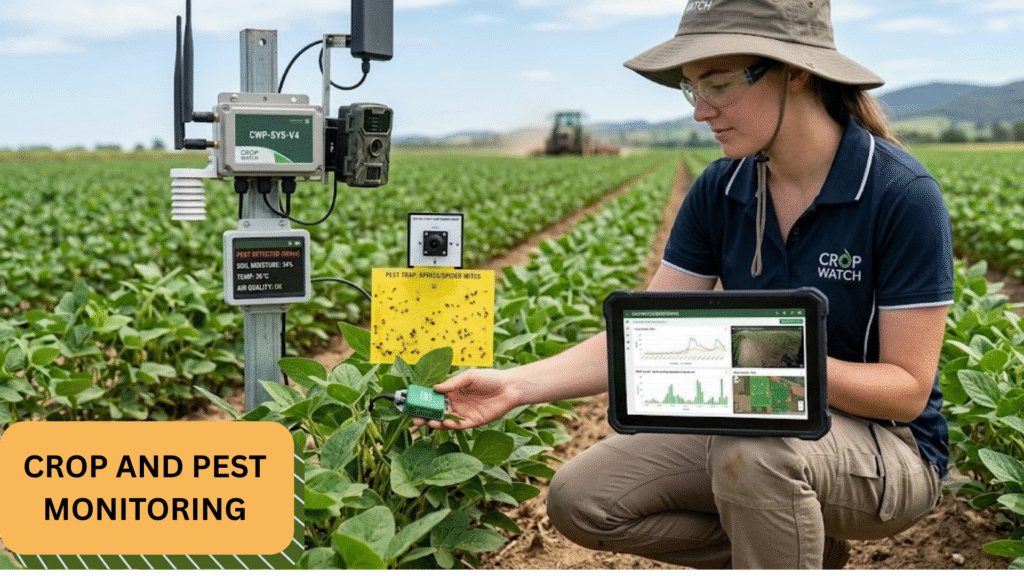
Cameras mounted on drones and field posts now detect problems instantly. In fact, on-field AI models can spot disease, pests, and nutrient gaps just by scanning leaves. No cloud connection is needed. Therefore, a farmer can act the same day, not a week later.
2. Autonomous Equipment
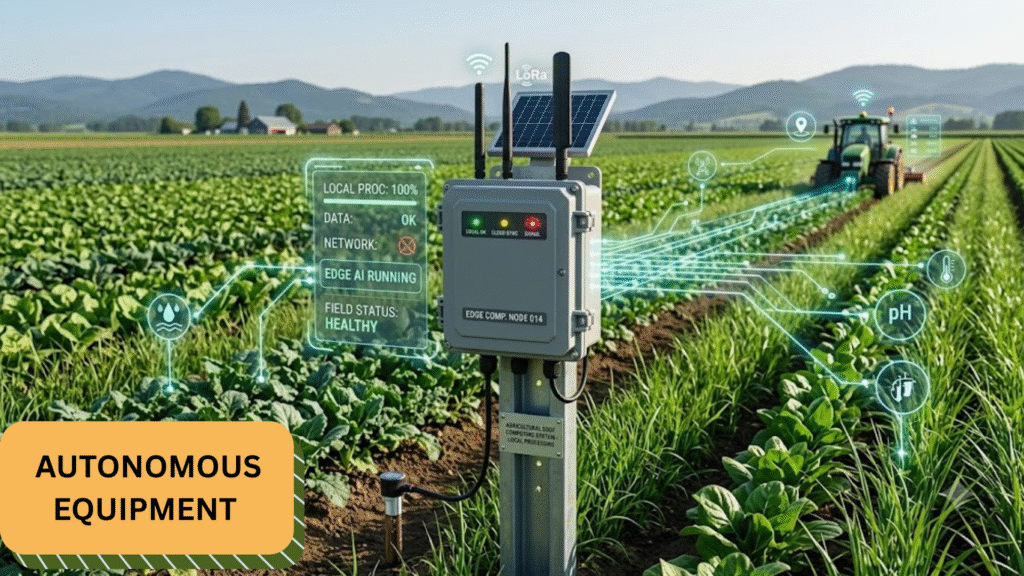
Tractors and planters now adjust themselves mid-operation. Onboard computers read sensor data as the machine moves. Then, they fine-tune planting depth, seed rate, and chemical use instantly. Because of this, equipment reacts to soil changes right away, not after the fact.
3. Irrigation and Resource Control
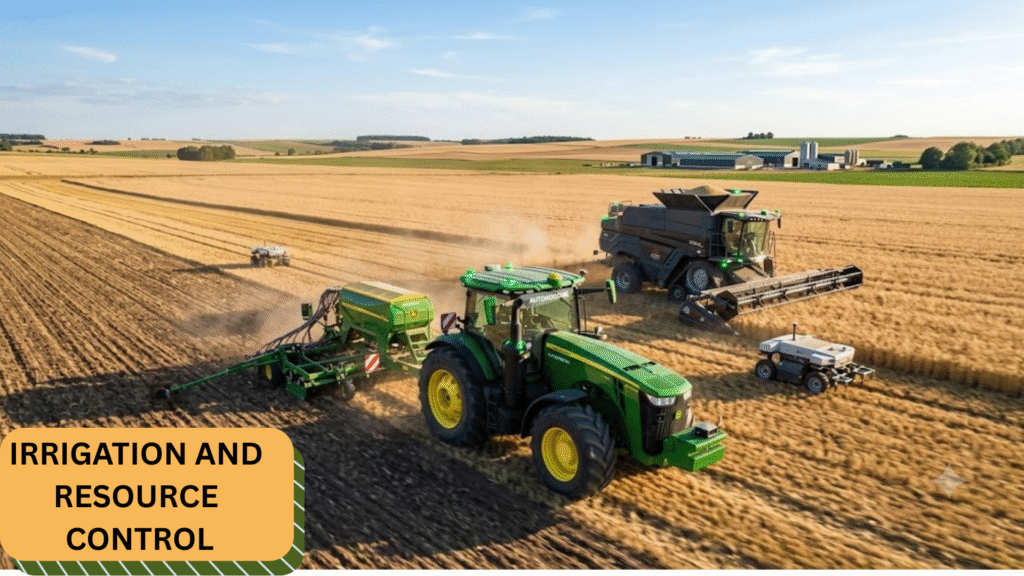
Water and fertilizer use has become far more precise. Local systems now analyze soil and weather data instantly. So, irrigation decisions no longer wait on distant servers. Consequently, this cuts both waste and cost.
4.Predictive Maintenance
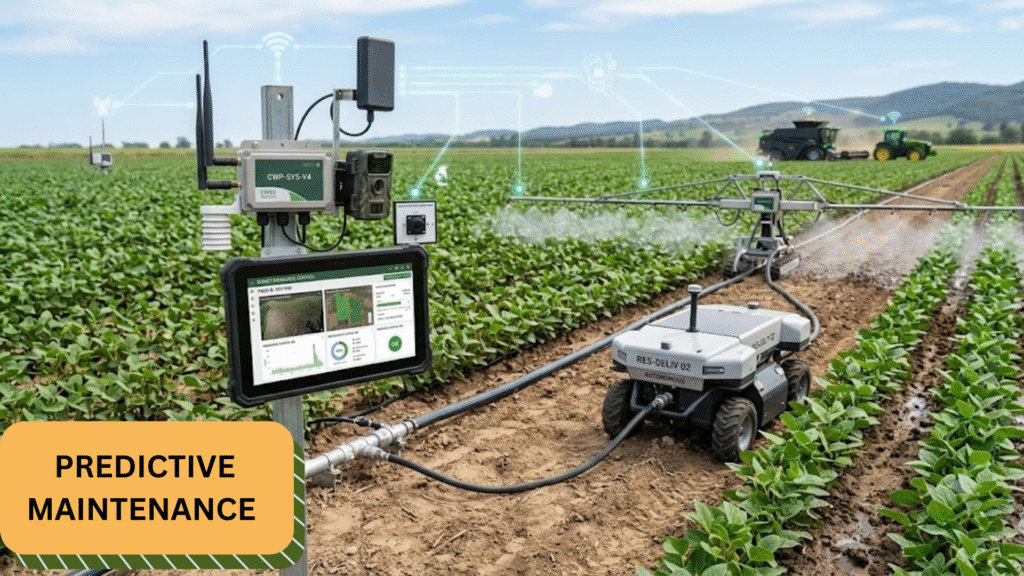
Machines increasingly flag their own problems. Specifically, sensors track vibration, temperature, and wear. Therefore, they catch issues before a breakdown happens in the middle of harvest season.
The Scale of the Shift
The numbers behind this trend are big. By 2026, over 80% of smart farms are expected to use AI edge devices for crop monitoring. This cuts waste. It also reduces overuse of chemicals. Meanwhile, the hardware market is growing fast too. One estimate puts the global edge AI chip market at $120 billion by 2030. That’s up from just $16 billion in 2023.
So, this isn’t a niche trend. It’s becoming the standard architecture for modern agriculture.
Why This Matters for Farmers Without Reliable Internet
Not every farm can wait for fiber lines to arrive. Some rely on satellite, fixed wireless, or cellular boosters, and even these connections drop during storms. Because of this, offline-first tools have become essential rather than optional.
Producers are adapting in practical ways. Many now choose software that works offline and syncs later. That way, they can capture data even while disconnected. Edge Computing in Agriculture takes this a step further. It doesn’t just store data for later. It acts on that data immediately, right in the field. No connection is required at all.
Getting Started With Edge Computing in Agriculture
Adopting this technology doesn’t require replacing an entire operation overnight. Instead, most farms start small. Then, they scale up gradually.
| Start with one use case. Pick pest detection, irrigation, or equipment monitoring first. |
| Choose field-ready hardware. Look for weatherproof sensors and gateways built for outdoor conditions. |
| Pair edge devices with cloud backup. Local processing handles real-time decisions, while the cloud stores long-term records. |
| Train staff on offline workflows. Make sure everyone knows how systems behave when the signal drops. |
| Expand gradually. Add more sensors and automated controls as budget and confidence grow. |
Frequently Asked Questions About Edge Computing in Agriculture
1. What is edge computing in agriculture, in simple terms?
It means processing farm data on local devices in the field instead of sending everything to a distant cloud server first. As a result, decisions happen instantly, even without internet access.
2. How does edge computing help farms with poor internet access?
It allows sensors, drones, and machinery to analyze data on-site. Therefore, farms in dead zones can still get real-time insights and control equipment without waiting for a connection.
3. What are common examples of edge computing on farms?
Common examples include pest and disease detection through onboard cameras, automated irrigation control, precision planting adjustments, and predictive maintenance alerts on tractors and harvesters.
4. Is edge computing expensive to adopt for small farms?
Not necessarily. Many farms start with a single sensor network or one use case, such as soil monitoring, then expand gradually as the technology proves its value.
5. What’s the difference between edge computing and cloud computing in agriculture?
Cloud computing processes data at a remote data center, which requires a stable connection. Edge computing processes data locally, near or on the device itself, so it keeps working during outages.
Final Thoughts on Edge Computing in Agriculture
Rural connectivity gaps aren’t disappearing overnight. However, farms no longer need to wait for perfect internet to go digital. Instead, Edge Computing in Agriculture brings real-time intelligence directly into the field. Even where signal drops and dead zones used to stop progress cold, it keeps working. So, as adoption grows through 2026 and beyond, this approach is quickly becoming the backbone of resilient, data-driven smart farms.
References
- Farmonaut. AI Edge & IoT Based Smart Agriculture: Top 2026 Trends. https://farmonaut.com/precision-farming/ai-edge-iot-based-smart-agriculture-top-2026-trends
- Qaltivate. AI on Edge Devices in Agriculture: The Complete 2026 Guide. https://qaltivate.com/blog/ai-on-edge-devices/
- ScienceDirect. A Comprehensive Review of Edge Computing Empowered Smart Agriculture: Trends, Opportunities and Future Directions. https://www.sciencedirect.com/science/article/abs/pii/S0168169925013584
- Tria Technologies. Edge AI in Agriculture: Smart Farming with Embedded Computing. https://www.tria-technologies.com/2026/02/27/edge-ai-agriculture/
- SNUC. Edge Computing in Agriculture and Smart Farming. https://snuc.com/blog/edge-computing-for-agriculture-and-smart-farming/
- DTN/Progressive Farmer. Rural Broadband Has Come Far, but Gaps Remain. https://www.dtnpf.com/agriculture/web/ag/news/business-inputs/article/2026/05/27/rural-broadband-come-far-gaps-remain
- USDA. Broadband. https://www.usda.gov/sustainability/infrastructure/broadband

Pingback: Silicon Valley's New Era: Driving Defense Tech Market Growth