
AI pest detection is no longer a futuristic concept it is happening right now on farms across six continents. The global AI-based pest detection market was valued at $1.5 billion in 2025 and is projected to surge to $5 billion by 2032, growing at a CAGR of 22%. These are not just numbers. They represent a fundamental shift in how humanity protects its food supply.
Every year, pests silently devour up to 40% of global crops, costing farmers and agribusinesses over $220 billion in annual losses a figure confirmed by the Food and Agriculture Organization (FAO). Despite decades of pesticide innovation, traditional pest control remains reactive, expensive, and environmentally harmful.
That is changing fast.
From smartphone cameras that identify insect species in seconds, to drones that scan thousands of acres with multispectral sensors, AI pest detection tools are delivering something traditional methods never could: instant, accurate, and actionable pest intelligence.
In this guide, you will learn exactly how AI pest detection works, which technologies deliver the fastest results in 2025, how to deploy them, and which platforms lead the market today. If you are dealing with specific infestations like whiteflies on cotton, you will also find a direct link to targeted control strategies below.
What Is AI Pest Detection? (And Why It Changes Everything)
AI pest detection refers to the use of artificial intelligence, specifically machine learning, computer vision, deep learning, and predictive analytics, to identify, monitor, classify, and respond to pest infestations in agricultural, residential, or commercial environments.
Unlike traditional scouting, which relies on manual inspection and is prone to human error, AI pest detection systems:
- Analyze images and video in real time
- Cross-reference visual data against databases of thousands of pest species
- Generate instant alerts and recommended control actions
- Learn and improve accuracy over time with each new data point
At its core, AI pest detection turns reactive pest management into proactive, precision-driven pest elimination.
5 Fastest AI Pest Detection Technologies in 2025
The moment you have been waiting for: the instant methods that are genuinely working right now. Each of these technologies delivers rapid identification and response, ranked by speed and scalability.
1. AI-Powered Mobile Apps: Pest ID in Your Pocket

The fastest entry point into AI pest detection for any farmer or homeowner is a smartphone app. Deep learning-based mobile applications can now process an uploaded insect photo in under 3 seconds, comparing visual features body shape, coloration, wing venation patterns against expansive species databases.
How it works in practice:
- Photograph a suspicious insect or damaged leaf in your field
- Upload it to the app
- Receive species identification, infestation severity estimate, and recommended treatment protocol instantly
Leading platforms in 2025 include Farmonaut, Plantix, and integrated modules within farm management suites like CropX (which partnered with IBM in 2024 to incorporate AI pest monitoring into its platform).
AI diagnostics through these tools are now estimated to reduce agricultural identification errors by up to 70%, dramatically cutting the window between infestation onset and response.
2. Computer Vision Cameras: 24/7 Automated Field Surveillance
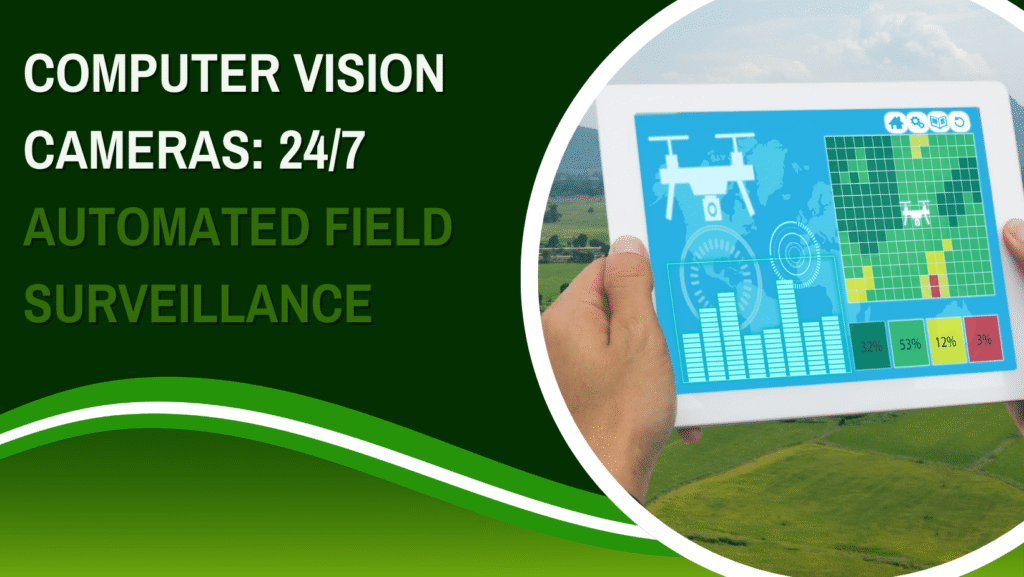
Computer vision for AI pest detection involves deploying high-resolution cameras in fields, greenhouses, or storage facilities that continuously scan crops and trigger instant alerts when pests are detected.
How the system works:
- Image Acquisition: cameras capture continuous footage of crop surfaces
- Preprocessing: images are cleaned and enhanced via AI filters
- Pest Classification: deep learning models (YOLOv8, ResNet50, and custom CNNs) identify pest species with high accuracy
- Alert Dispatch: farm managers receive real-time mobile notifications with pest location and density data
In greenhouse environments, this approach is particularly powerful. Installed cameras can identify whiteflies, aphids, spider mites, and thrips at the earliest stage before colonies establish and spread. If you are managing a cotton operation dealing with whitefly pressure, precision early-detection strategies are covered in detail here.
Computer vision systems using models like Deep-PestNet have achieved species-level classification rates exceeding 74% in field testing, with commercial systems continuing to improve in 2025.
3. AI Pest Detection Drones: Large-Scale Scanning in Minutes
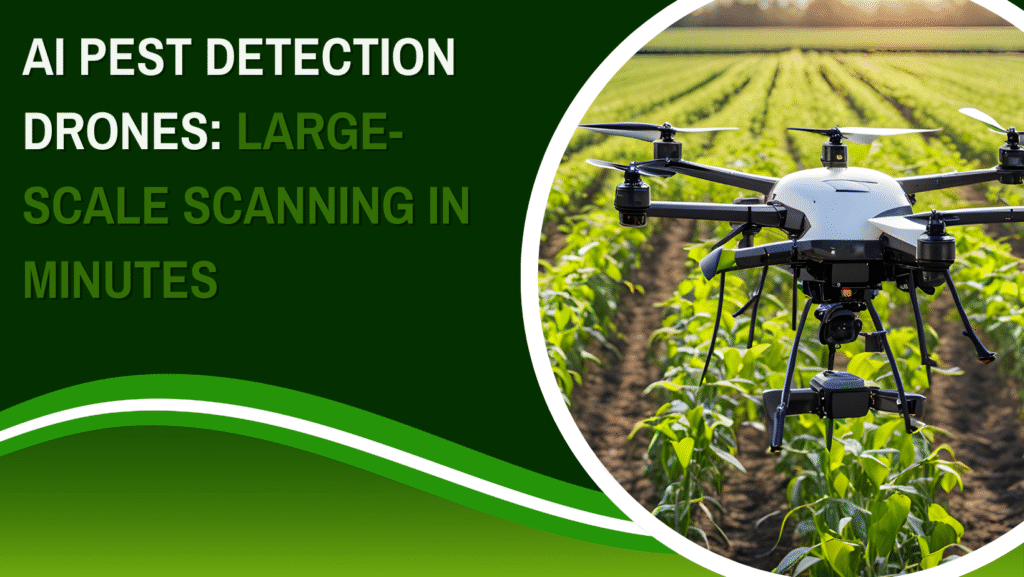
For operations managing hundreds or thousands of acres, drone-based AI pest detection delivers the most powerful combination of speed and scale available in 2025.
Capabilities of AI pest detection drones:
- Cover vast field areas in a single flight mission
- Capture RGB, multispectral, infrared, and hyperspectral imagery simultaneously
- Identify pest hotspots, insect distribution patterns, and early crop stress indicators invisible to the naked eye
- Auto-generate treatment prescription maps for targeted pesticide application
Drone techniques are faster and more accurate than conventional ground-based inspection methods, according to research published in Scientific Reports (2025). Platforms like Farmonaut’s satellite-powered monitoring complement drone data by using NDVI (Normalized Difference Vegetation Index) analysis to flag crop stress zones, frequently a leading indicator of pest pressure before visible symptoms appear.
The integration of AI with drone hardware is also shrinking rapidly. Ultra-low-power pocket-sized drones running on-board deep learning inference (based on architectures like Faster-PestNet) are now entering commercial agriculture, enabling continuous autonomous patrol of fields without human pilots.
4. IoT Smart Traps and Sensor Networks: Automated Ground-Level Monitoring
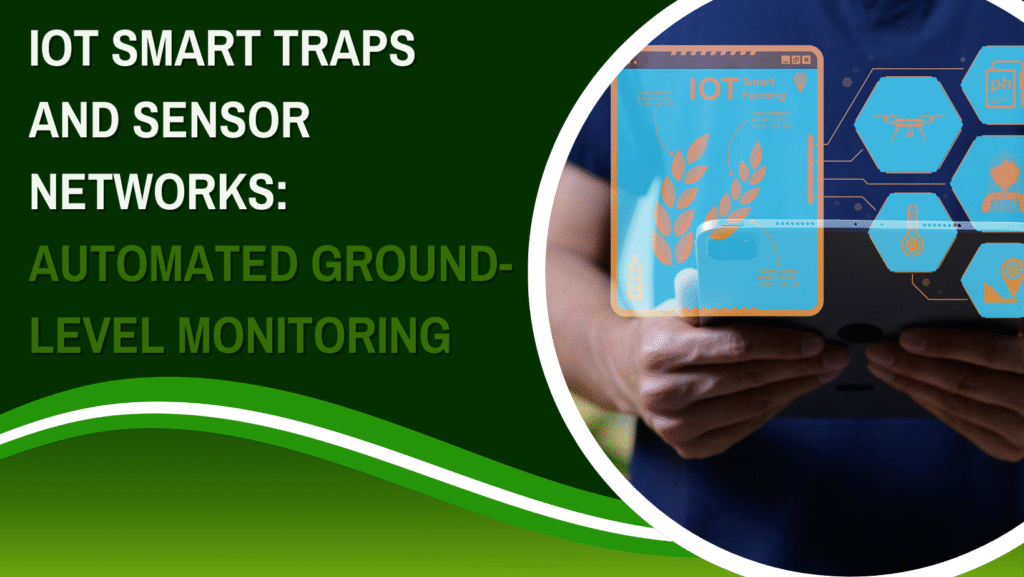
IoT (Internet of Things) enabled smart traps represent a critical complement to aerial detection. These devices combine physical pest traps, pheromone traps, light traps, sticky traps with embedded cameras and AI classification engines that automatically:
- Count captured insects
- Identify species
- Transmit real-time population data to a cloud dashboard
- Trigger alerts when trap counts cross economic threshold levels
Pheromone-based dendroctonus valens monitoring with AI trap analysis, for example, has been validated in research for automatic in-trap pest detection with high precision. For row crops and orchards, networks of these smart traps distributed across a field give farmers a live population map, allowing targeted intervention exactly where needed.
This AI pest detection method is particularly valuable for monitoring whitefly populations, aphids, and other soft-bodied insects that may not be easily captured in aerial imagery.
5. Satellite-Based AI Monitoring and Predictive Analytics
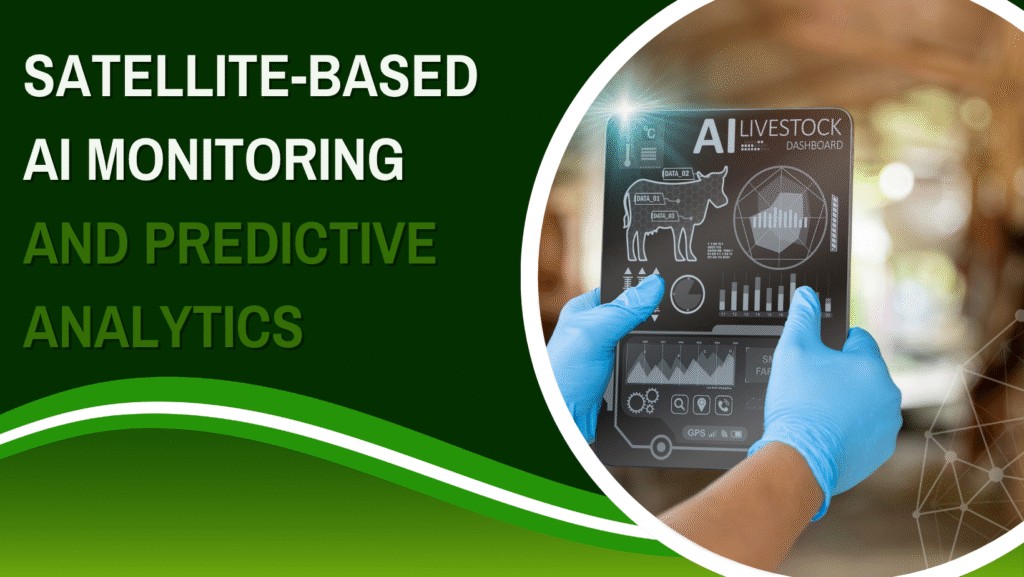
The most macro-level layer of AI pest detection is satellite-based remote sensing combined with predictive AI models. Platforms like Farmonaut integrate satellite imagery with machine learning to:
- Detect large-scale crop health anomalies correlated with pest outbreaks
- Forecast pest migration patterns based on weather, humidity, and seasonal data
- Recommend biological control methods, pheromone deployment strategies, or physical trap placement based on specific pest lifecycle models
- Coordinate field operations workers, machinery, and treatment supplies to exactly where intervention is needed
Predictive AI models trained on multi-year datasets can anticipate infestations days or even weeks before they become visible, giving farmers a genuine first-mover advantage in pest control.
How to Deploy AI Pest Detection on Your Farm: A Step-by-Step Approach
Getting started with AI pest detection does not require massive investment. Here is a practical deployment path for 2025:
Step 1 — Start with a mobile app. Download a deep learning-powered crop scouting app. Begin photographing every insect and crop anomaly you observe. This builds your own data baseline immediately.
Step 2 — Install field cameras in high-risk zones. Identify the areas of your operation historically most vulnerable to pest pressure and install computer vision monitoring cameras. Greenhouse operations benefit enormously from this step.
Step 3 — Deploy smart IoT traps. Position AI-enabled pheromone or light traps at field perimeters and hotspot locations. Connect them to your monitoring dashboard for continuous population tracking.
Step 4 — Schedule drone surveys. Conduct AI drone surveys at critical crop growth stages — immediately post-planting, at canopy closure, and during reproductive phases when pest pressure peaks.
Step 5 — Integrate predictive analytics. Connect your field data to a platform offering AI-driven outbreak forecasting and treatment recommendations. Let the AI handle population trend analysis so your decisions are always data-backed.
AI Pest Detection and Whitefly Control: A Critical Connection
Whiteflies represent one of the most economically damaging pest complexes in global agriculture, attacking cotton, vegetables, and ornamental crops with devastating speed. Their ability to reproduce rapidly, develop pesticide resistance, and vector plant viruses makes early detection absolutely essential.
AI pest detection is tailor-made for whitefly management because:
- Computer vision systems can detect whitefly nymph colonies on leaf undersides at the earliest instar stages
- Smart traps quantify adult populations with precision before breeding explosions occur
- Predictive models incorporate temperature and humidity thresholds that trigger whitefly population surges
For a comprehensive breakdown of whitefly pressure on cotton and the most effective integrated control strategies, visit this dedicated resource: Whiteflies on Cotton Control.
Key Benefits of AI Pest Detection Over Traditional Methods
| Factor | Traditional Pest Control | AI Pest Detection |
|---|---|---|
| Detection Speed | Days to weeks | Seconds to hours |
| Accuracy | Moderate (human error) | Up to 95%+ (trained models) |
| Scale | Limited by labor | Unlimited via drones/satellites |
| Cost Over Time | High recurring chemical costs | Lower through precision application |
| Environmental Impact | High pesticide use | Significantly reduced |
| Prediction Capability | Reactive only | Proactive outbreak forecasting |
Latest References (2024–2025)
Future Data Stats (2025). AI-Based Pest Detection Market Research Report 2025–2032. https://www.futuredatastats.com/ai-based-pest-detection-market
Data Mintelligence (2026). AI Based Pest Management App Market, Growth Rate Report 2025–2032. https://www.datamintelligence.com/research-report/ai-based-pest-management-app-market
Dataintelo (2025). Pest Detection AI Market Research Report 2033. https://dataintelo.com/report/pest-detection-ai-market
Khan, A. et al. (2024). AI-Enabled Crop Management Framework for Pest Detection Using Visual Sensor Data. PMC / NCBI. https://pmc.ncbi.nlm.nih.gov/articles/PMC10934939/
Frontiers in Sustainable Food Systems (2025). Remote Sensing and Artificial Intelligence: Revolutionizing Pest Management in Agriculture. https://www.frontiersin.org/journals/sustainable-food-systems/articles/10.3389/fsufs.2025.1551460/full
Nature / Scientific Reports (2025). AI-Driven Drone Technology and Computer Vision for Early Detection of Crop Disease. https://www.nature.com/articles/s41598-025-32384-1
Farmonaut (2025). AI Insect Identification Online: 7 Innovations for 2026. https://farmonaut.com/precision-farming/ai-insect-identification-online-7-innovations-for-2026
Meegle (2025). Computer Vision for Pest Detection. https://www.meegle.com/en_us/topics/computer-vision/computer-vision-for-pest-detection
FAO (2023). The State of Food and Agriculture: Revealing the True Cost of Food. Food and Agriculture Organization of the United Nations.
Frequently Asked Questions
1. What is AI pest detection?
AI pest detection is the use of artificial intelligence technologies including machine learning, computer vision, and predictive analytics to automatically identify, classify, and monitor pest infestations in real time, enabling faster and more precise pest control responses.
2. How does AI pest detection work?
AI pest detection works by capturing images or sensor data from cameras, drones, IoT traps, or satellites, then running those inputs through trained deep learning models that classify pest species, estimate population density, and generate instant alerts or treatment recommendations
3. What are the best AI pest detection tools in 2026?
The leading AI pest detection tools in 2025 include AI-powered mobile scouting apps (Plantix, Farmonaut), computer vision field cameras, IoT smart traps with integrated species classification, AI-equipped drones with multispectral sensors, and satellite-based predictive analytics platforms.
4. Can AI pest detection reduce pesticide use?
Yes. AI pest detection enables precision application: pesticides are applied only where and when pest populations actually cross economic threshold levels. This targeted approach significantly reduces total chemical input, lowering costs and environmental impact.
5. How accurate is AI for pest identification?
Current commercial AI pest detection systems achieve species-level classification accuracy exceeding 74–95% depending on the model and training dataset, with accuracy continuing to improve as more field data is collected.
6. How does AI detect whiteflies?
AI detects whiteflies through computer vision cameras that identify nymph colonies on leaf undersides, IoT pheromone traps that count and classify adult insects, and predictive models that flag environmental conditions favorable to whitefly population explosions.
7. What is the size of the AI pest detection market in 2026?
The global AI-based pest detection market was valued at approximately $1.5 billion in 2025 and is projected to reach $5 billion by 2032, growing at a CAGR of 22%.
8. Are AI pest detection systems suitable for small farms?
Yes. AI mobile apps provide an accessible, low-cost entry point for smallholder farmers, requiring only a smartphone to access species identification, infestation severity scoring, and treatment recommendations in seconds.

Pingback: Will AI Replace Farmers? This New Tool Changes Everything